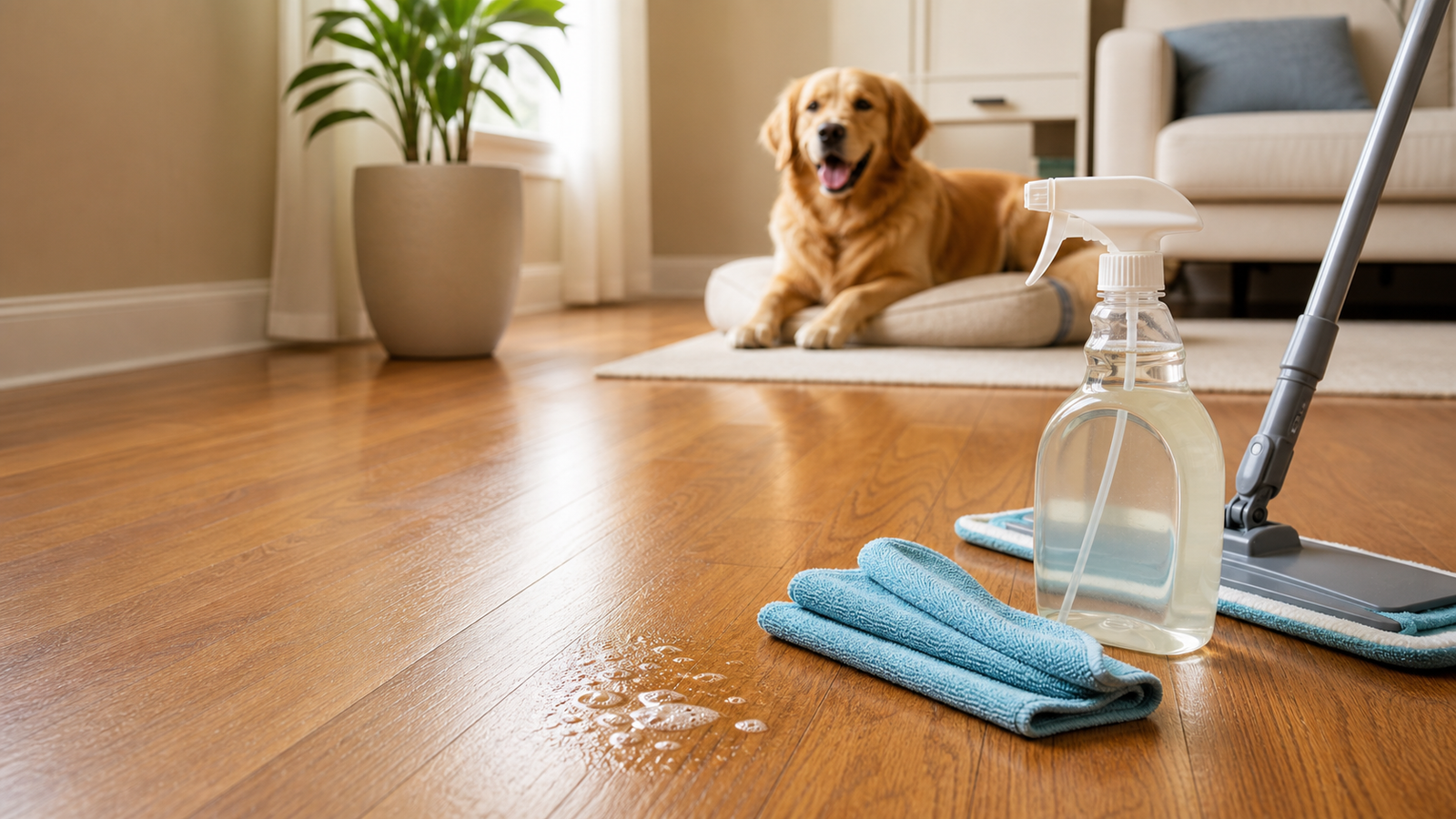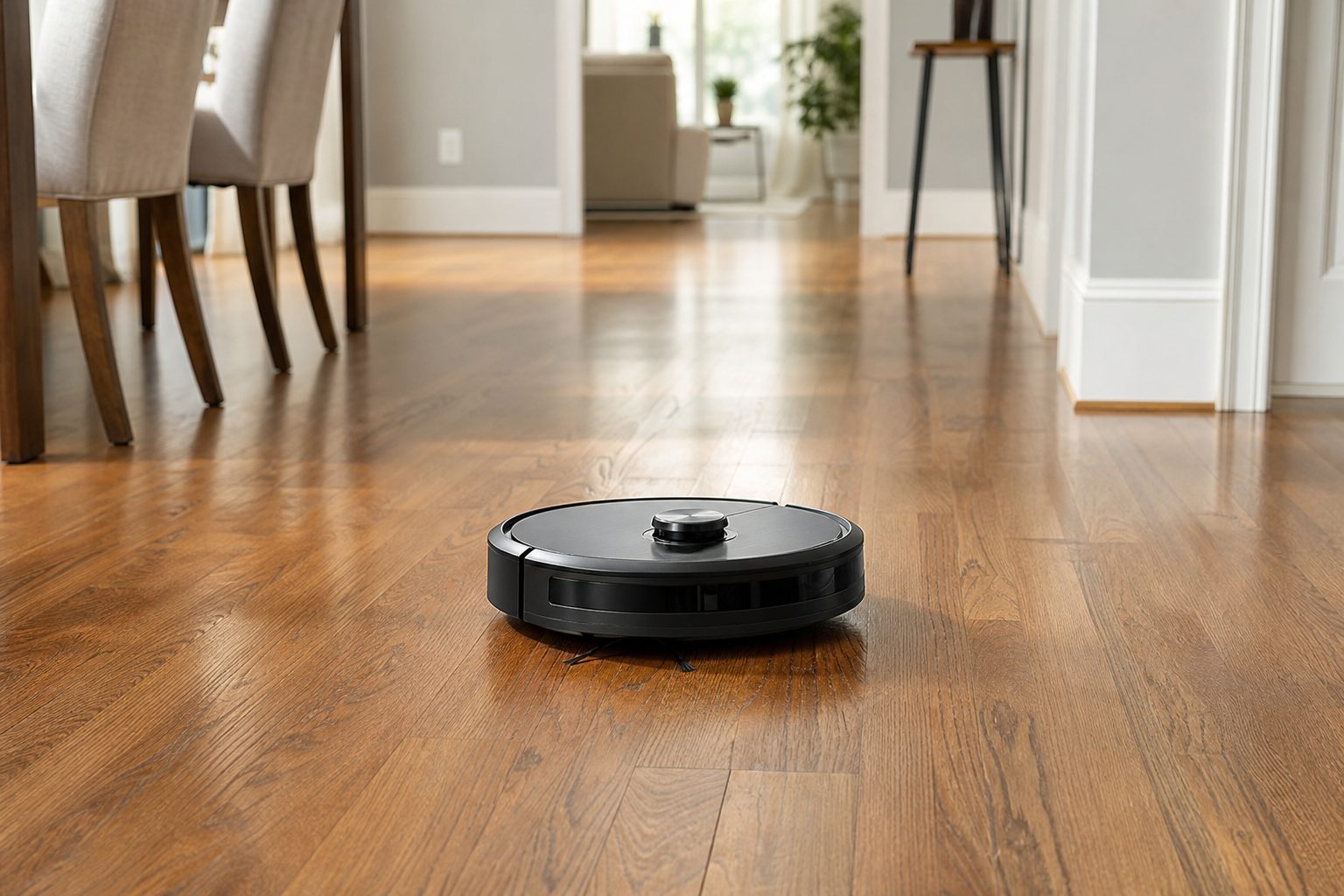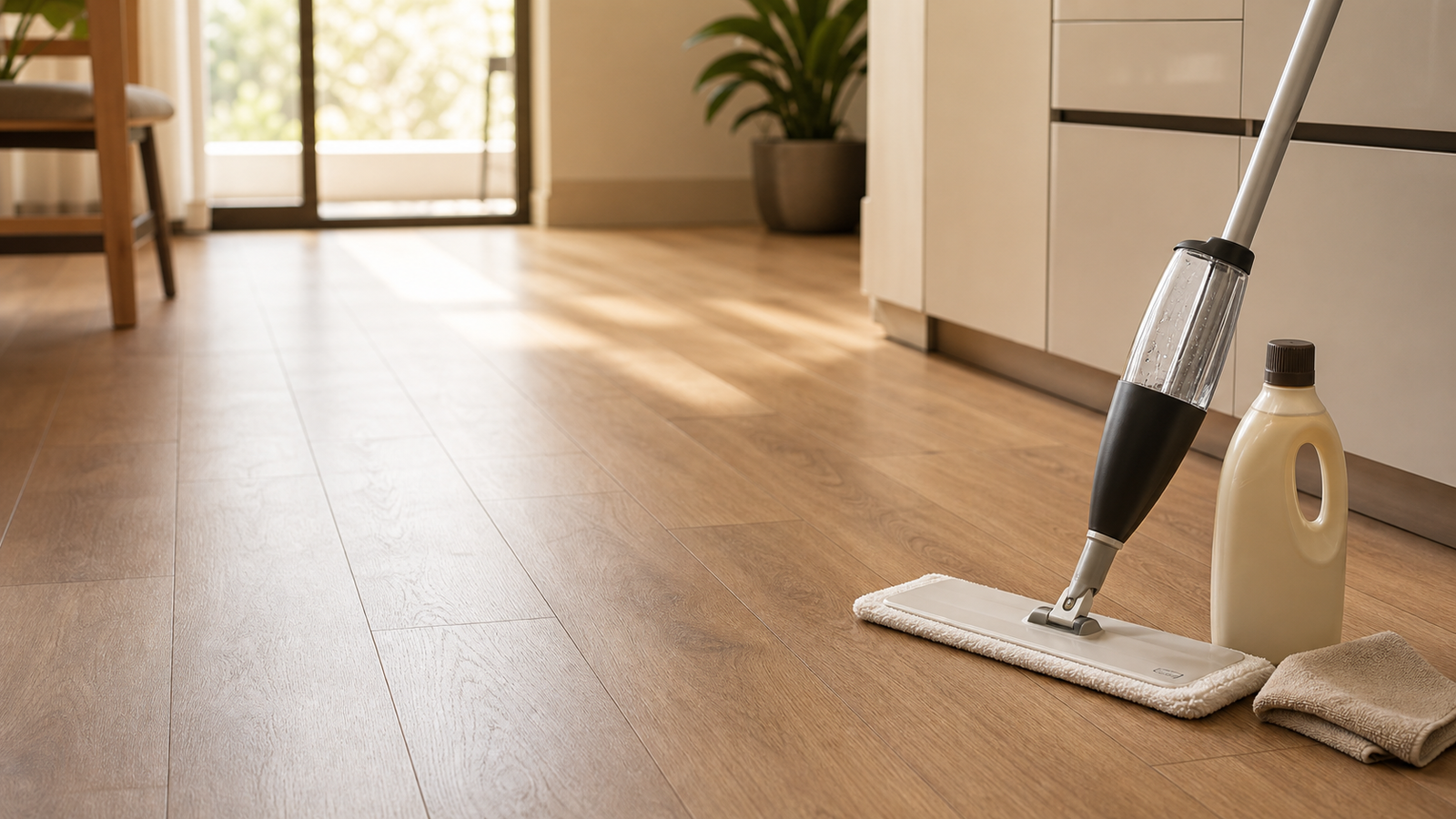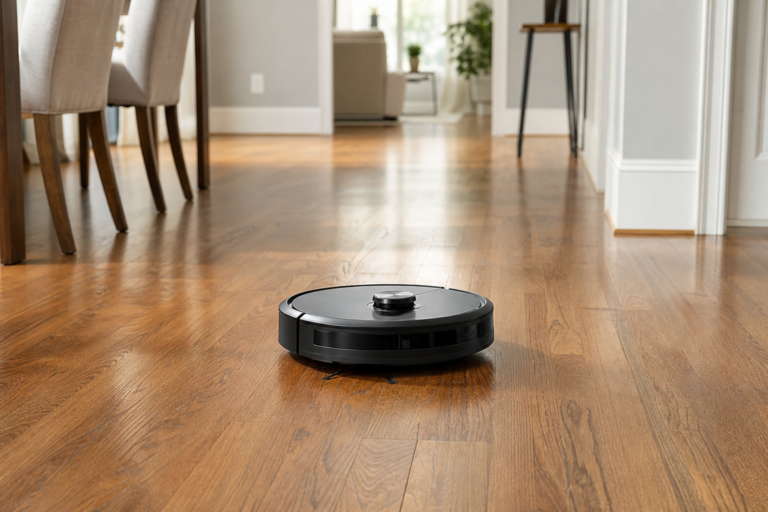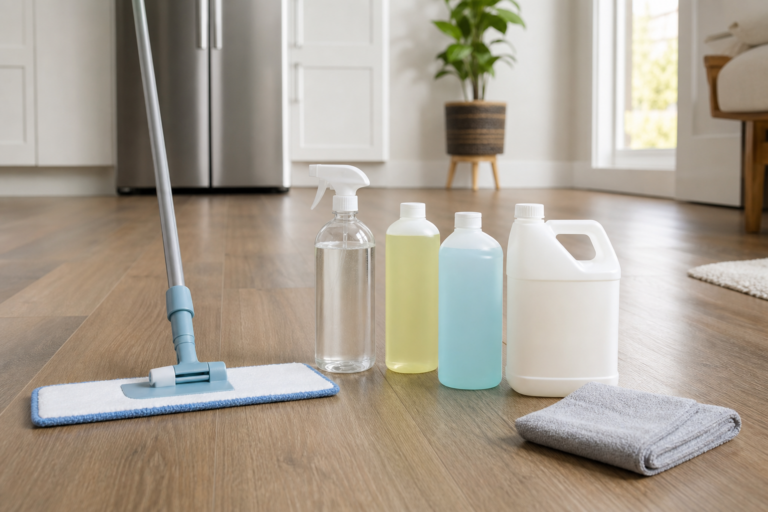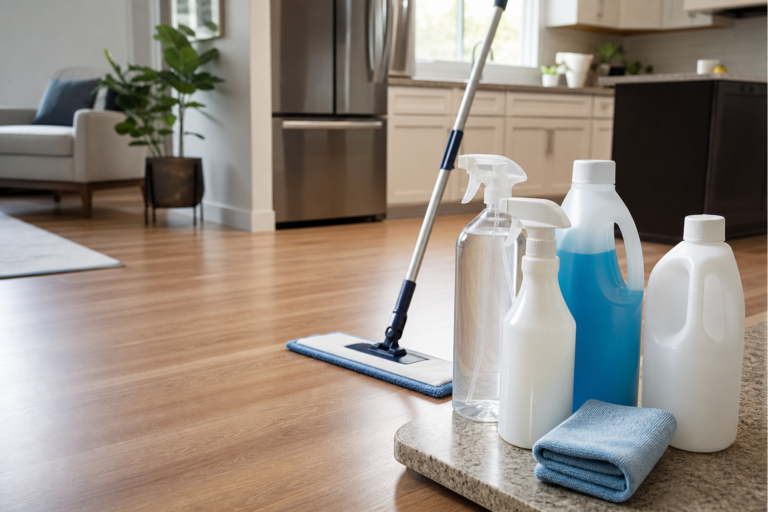

Hardwood floors rarely need the strongest cleaner in the cabinet. They need the right cleaner, the right amount of moisture, and a mop that does not push dirty water into seams. When a hardwood floor looks cloudy after cleaning, the problem is often residue, too much liquid, oil soap buildup, or a cleaner that does not match the finish.
The best hardwood floor cleaner for most homes is a low-residue formula made for finished wood. That usually means sealed, unwaxed, unoiled hardwood with a protective polyurethane-style finish. If your floor is unsealed, waxed, oiled, newly refinished, or old enough that the finish is uncertain, check the flooring or finish manufacturer's guidance before using any bottled cleaner or powered mop.
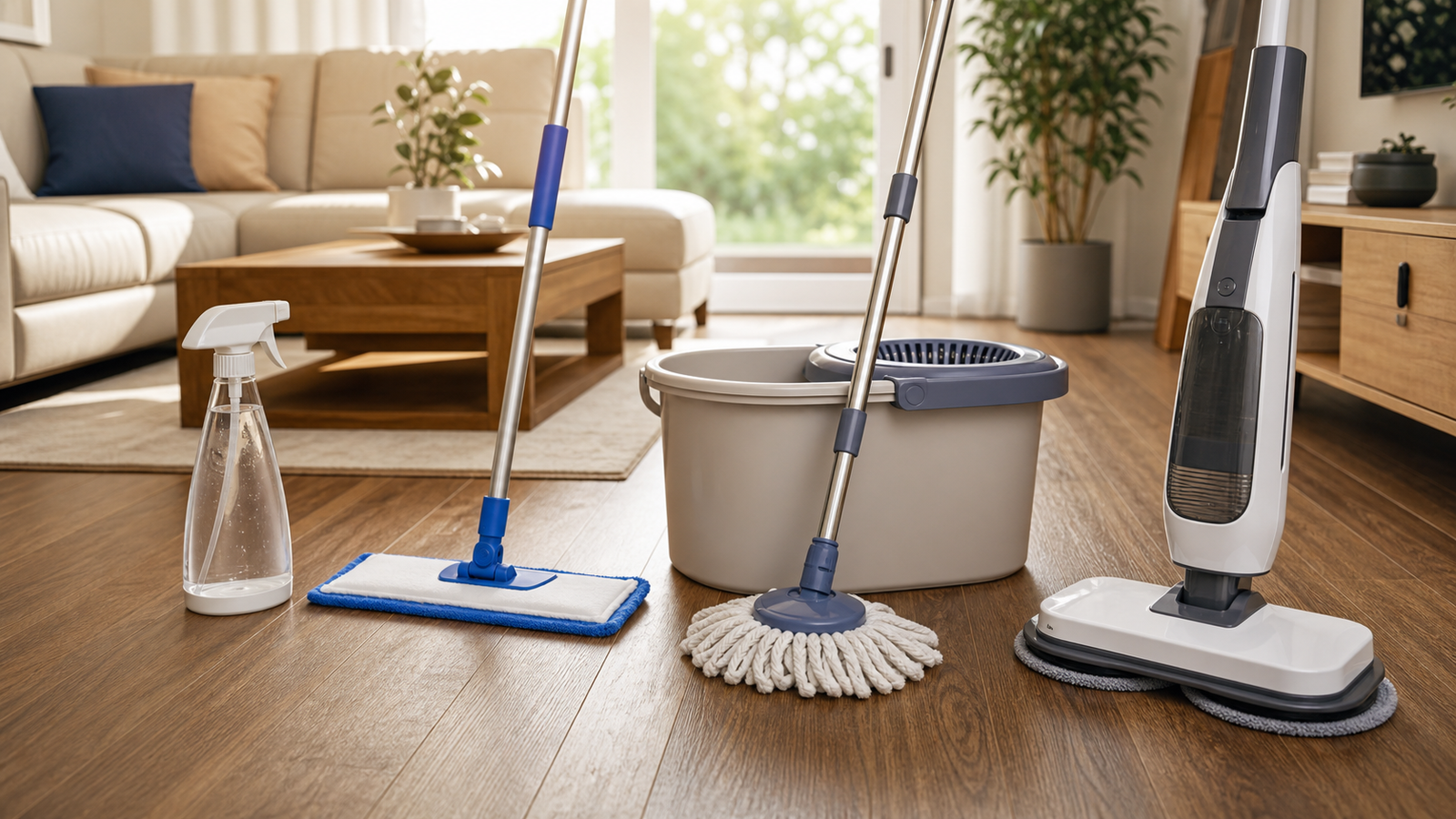
This guide separates daily cleaners from spray mops, powered mops, and traditional microfiber mops so the purchase matches the floor problem you actually have.
Quick Picks: Best Hardwood Floor Cleaners by Job
| Pick | Best for | Why it works | Main tradeoff |
|---|---|---|---|
| Best Overall Cleaner: Bona Hardwood Floor Cleaner Spray | Most finished hardwood floors | pH-neutral, fast-drying, and positioned for unwaxed, unoiled, polyurethane-finished wood | Can still haze if overused or paired with a dirty pad |
| Best Pleasant Everyday Cleaner: Method Squirt + Mop Wood Floor Cleaner | Quick routine cleaning with a warmer scent | No-rinse squirt-and-mop format with controlled application | Fragrance is a preference, and too much product can still leave film |
| Best Streak-Free Shine Cleaner: Weiman Hardwood Floor Cleaner | Finished floors that need a cleaner-looking sheen | Marketed around streak-free cleaning and no residue on finished hard floors | Do not confuse the cleaner with polish or restorer |
| Best Spray Mop System: Bona Hardwood Floor Premium Spray Mop | A refillable wood-floor mop setup | Pairs wood-floor cleaner with a washable microfiber pad and controlled spray | Bulkier than a bottle and cloth |
| Best Powered Mop for Sealed Hardwood: Bissell SpinWave Cordless Pet | Sticky spots, pet tracks, and larger sealed-hardwood areas | Powered pads reduce scrubbing effort and on-demand spray limits liquid | Pads and tank need cleaning after use |
| Best Bucket Mop When You Need Clean Water: O-Cedar EasyWring RinseClean Spin Mop | People who prefer a traditional mop but want cleaner rinse water | Two-chamber bucket separates clean and dirty water | Hardwood safety depends on wringing the mop very dry |
If your floor is sealed and mostly needs weekly upkeep, Bona is the safest starting point. If you like a scented cleaner and clean often, Method is easier to enjoy. If sticky spots and pet traffic are the main issue, the SpinWave gives more help than another spray bottle. If the floor is cloudy, pause before buying anything stronger: old residue, excess cleaner, and a wet mop are often the real causes.

What Hardwood Floors Actually Need
Hardwood cleaning starts with the finish, not the tree species. A modern sealed hardwood floor can usually handle a purpose-made wood floor cleaner used lightly with microfiber. An unsealed, waxed, oiled, or worn floor is less forgiving because liquid can move into seams, pores, scratches, and weak spots.
The National Wood Flooring Association's consumer guidance is conservative for a reason: avoid wet mops and steam mops on wood floors, clean spills quickly, and keep excess moisture away from the floor. Bruce's hardwood care guidance is similarly cautious, warning against water, steam, ammonia, wax, oil soap, and acidic cleaners on its hardwood flooring.
Those warnings do not mean hardwood floors cannot be cleaned. They mean hardwood should not be treated like tile. The floor usually needs dry debris removed first, a small amount of compatible cleaner, and a microfiber pad that is damp rather than wet. If grit stays on the floor, it can scratch. If the mop is too wet, moisture can work into seams. If too much cleaner is used, the floor may feel tacky or look dull after it dries.
This is also why "shine" is a tricky word. A cleaner should remove soil and residue. A polish or restorer leaves something behind to change the look of the surface. That can be useful on the right floor, but it is not the same job as routine cleaning. Using polish repeatedly when the floor only needs cleaning can create buildup that later looks like haze.
For most finished hardwood, the right routine is simple: vacuum or dust mop first, use a wood-floor cleaner sparingly, mop with microfiber, change or wash pads often, and never leave standing water behind.
Best Overall Cleaner: Bona Hardwood Floor Cleaner Spray
Bona Hardwood Floor Cleaner Spray is the best default choice because it matches what most finished hardwood floors need: low moisture, a wood-specific formula, and a cleaner that is not trying to act like a polish. The product page describes it as residue-free, fast-drying, pH-neutral, and safe for unwaxed, unoiled, polyurethane-finished wood floors.
That finish language matters. Bona is not a universal answer for every wood surface. It is strongest on the kind of sealed hardwood found in many modern homes. If your floor has a wax or oil finish, or if you inherited an older floor with unknown finish history, do not assume a polyurethane-floor cleaner is automatically correct.
The best way to use Bona is lighter than many people expect. A few sprays across a small working area are enough. Mop with a clean microfiber pad, then move on. If the pad is already dirty or the floor has old residue, adding more cleaner can make the floor look worse instead of better.
Real owner discussions around Bona tend to split in a useful way. Many people treat it as the standard safe recommendation for finished wood. Complaints about haze or foggy residue often lead back to how much cleaner was used, whether old oil soap or polish was already on the floor, whether the mop pad was clean, and what finish the floor actually had.
Bona is the cleaner to buy when you want a reliable first choice for routine finished-hardwood cleaning. It is not the right fix for damaged finish, wax buildup, deep scratches, or residue from years of incompatible products.
Best Pleasant Everyday Cleaner: Method Squirt + Mop Wood Floor Cleaner
Method Squirt + Mop Wood Floor Cleaner is the easiest product here to like day to day. It has a warmer scent profile than many hardwood cleaners, the bottle is simple to use, and the squirt-and-mop format keeps the routine quick. The product page describes it as a no-rinse cleaner with a nozzle designed to spread cleaner and avoid puddling.
That makes it a good fit for sealed wood floors that are already in decent shape. It is useful for footprints, light kitchen film, dust, and the ordinary traffic that makes a clean floor stop feeling clean. It is not a restoration product, and it should not be used to mask a finish problem.
The same moisture rules still apply. A pleasant scent can make a cleaner feel gentler, but the floor does not know the difference if too much liquid is left on the surface. Squirt less than you think, spread it with a clean microfiber mop, and avoid working so large an area that the cleaner sits before being wiped.
Method is also a better pick when cleaning experience matters. Some people simply clean more consistently with a product they enjoy using. If a harsh smell makes you avoid mopping, Method can be the more realistic purchase than a technically stronger cleaner that stays in the cabinet.
Choose Method for light, frequent cleaning on sealed wood floors when scent and convenience matter. Choose Bona if you want the more neutral default, and choose a powered mop only if stuck-on soil is the part that makes cleaning frustrating.
Best Streak-Free Shine Cleaner: Weiman Hardwood Floor Cleaner
Weiman Hardwood Floor Cleaner is the pick for finished floors where the desired result is not just "less dirty" but visibly fresher. The product page describes it for finished hardwood, engineered flooring, vinyl, and laminate, with streak-free shine and no residue.
The important distinction is that this recommendation is for the cleaner, not a polish or restorer. Weiman also sells products that are designed to restore shine or leave a protective-looking layer. Those products can be useful in the right context, but they are not interchangeable with a daily cleaner. If your floor is already hazy from buildup, adding a shine product before cleaning the residue can make the problem harder to diagnose.
Weiman makes sense when the floor is sealed, not overly damaged, and you want a cleaner that leaves the surface looking a little more finished after normal mopping. It is especially useful for rooms where sunlight shows streaks and footprints easily.
The best results still come from careful prep. Remove dust and grit first. Use a clean pad. Apply lightly. If a floor looks streaky after cleaning, the cause may be too much cleaner, old residue, hard water, or a pad that was not fully clean. Switching brands helps only when the process is also clean.
Buy Weiman if your finished floor needs regular cleaning and you prefer a cleaner with a more visible shine profile. Do not buy it expecting it to repair worn polyurethane, fill scratches, or replace a proper refinish.
Best Spray Mop System: Bona Hardwood Floor Premium Spray Mop
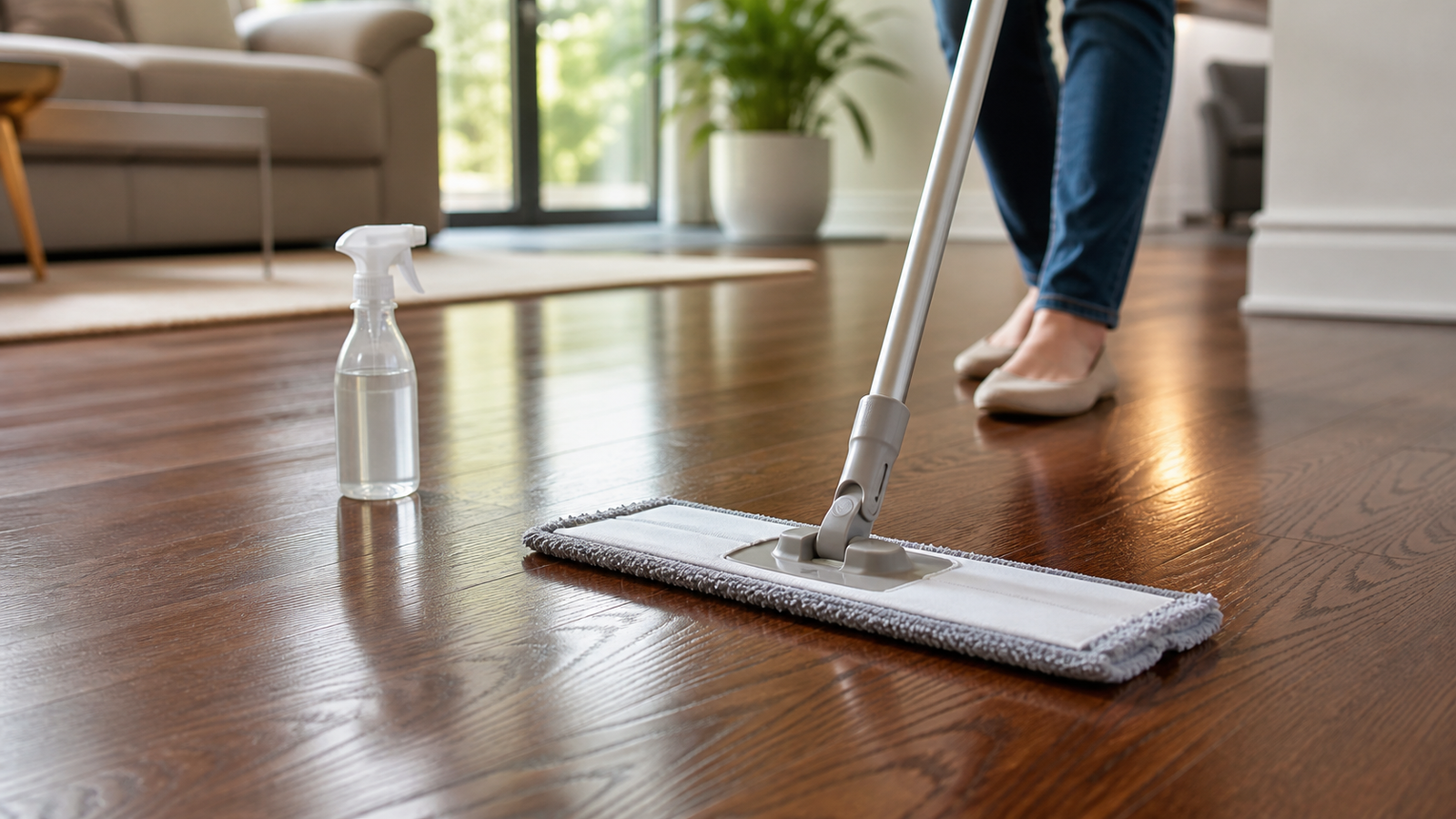
The Bona Hardwood Floor Premium Spray Mop is the right choice if the problem is not just cleaner selection, but the whole cleaning setup. A bottle of cleaner is easy to overapply. A bucket mop is easy to leave too wet. A dedicated spray mop gives more control because the cleaner comes out in small bursts and the microfiber pad spreads it thinly.
The Amazon product page for this Bona system lists wood-floor cleaning concentrate and a machine-washable microfiber cleaning pad. Bona's own mop guidance also emphasizes washable pads and floor-specific cleaner pairings. That combination is exactly what hardwood usually needs: controlled liquid plus a pad that can be washed instead of reused dirty.
This system is especially useful in homes where several people clean the floor. A spray mop creates a repeatable routine. Fill it correctly, spray lightly, mop with the grain where possible, and wash the pad when it gets dirty. That is more consistent than guessing cleaner concentration in a bucket.
The tradeoff is storage and upkeep. The mop takes more room than a spray bottle, and the pad needs regular washing. If you let a dirty pad dry on the mop and use it again, the system loses much of its advantage.
Choose the Bona spray mop if you want a complete, low-moisture hardwood cleaning setup. Choose the Bona spray bottle if you already have microfiber pads and only need the cleaner.
Best Powered Mop for Sealed Hardwood: Bissell SpinWave Cordless Pet
The Bissell SpinWave Cordless Pet is the best pick when the floor needs more mechanical help than a flat mop can provide. It is designed for sealed hard floors, and the product page lists 20 minutes of cordless runtime, powered spinning pads, and on-demand spray for targeted messes.
The phrase "sealed hard floors" is the key boundary. This is not a tool for unfinished wood, old floors with open seams, waxed floors, or floors where the manufacturer warns against wet cleaning. On a sealed hardwood floor, the SpinWave can make sense for pet tracks, sticky spots near the kitchen, and larger open areas where hand mopping gets tiring.
The benefit is controlled agitation. The pads rotate, so you do not have to scrub as hard by hand. The on-demand spray helps avoid flooding the floor if you use it with restraint. The mistake is treating it like a floor scrubber. Hardwood still needs light liquid and prompt drying, even when the mop is powered.
Owner conversations around powered mops often focus on maintenance, and that is fair. The pads should be washed, the tank should not sit dirty, and the underside needs attention if it picked up sticky residue. A powered mop that is not cleaned after use can create odors or redeposit grime.
Buy the SpinWave if sealed hardwood, pets, and sticky spots make ordinary mopping annoying. Skip it if the floor only needs dust control, or if you are unsure whether your hardwood finish can tolerate powered wet mopping.
Best Bucket Mop When You Need Clean Water: O-Cedar EasyWring RinseClean Spin Mop
The O-Cedar EasyWring RinseClean Spin Mop is the most traditional option here, but it solves a real problem: dirty mop water. The product page describes a two-chamber bucket that separates clean and dirty water and a microfiber mop head that can be used on finished hardwood, wood, laminate, tile, and vinyl.
That separation is helpful because a regular bucket can turn into a loop of rinsing a dirty mop in dirty water. On hardwood, however, the bucket feature does not remove the main risk. The mop still has to be wrung very dry. If the microfiber head is wet enough to leave visible water sitting on the floor, it is too wet for hardwood.
This system is best for people who dislike spray mops and want a more familiar cleaning routine. It can also work well when the house has mixed flooring, such as tile in the kitchen and finished hardwood in nearby rooms. The key is changing technique when you move onto wood: less water, smaller areas, and more drying awareness.
The O-Cedar is not the best pick for someone who tends to mop aggressively. Hardwood does not reward force or water volume. It rewards restraint. A barely damp microfiber pass after dry debris has been removed is usually enough.
Choose this mop if you want cleaner rinse water and already trust yourself to wring the mop nearly dry. Choose a spray mop if you want the tool itself to limit how much liquid reaches the floor.
What Not to Use on Hardwood Floors
The wrong cleaner can make hardwood look worse even when it technically removes dirt. The most important products to be cautious with are steam mops, wet mops, oil soaps, wax-based cleaners, ammonia, bleach, abrasive cleaners, and strong vinegar solutions.
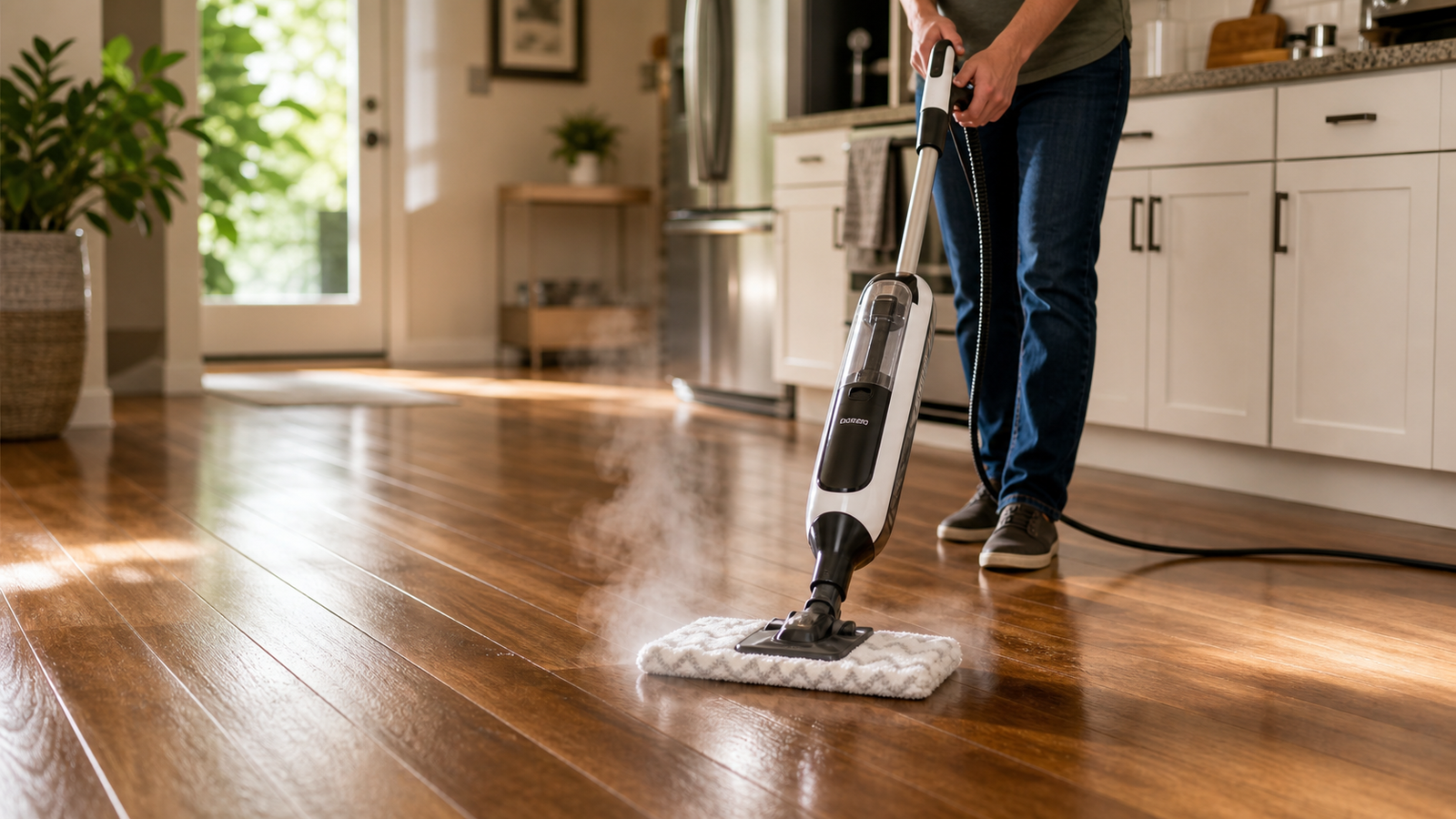
Steam is especially tempting because it feels clean. On hardwood, heat and moisture can work into seams, small cracks, and worn finish. Wood-floor industry guidance warns against steam mops because damage can build over time rather than show up immediately.
Wet mopping creates a similar risk. A floor can look fine after one wet cleaning and still suffer if water repeatedly gets into seams or under weak finish. Standing water is the line to avoid. If you can see water pooling or sitting on the surface, the mop is too wet.
Oil soap is another common source of disagreement. Some people grew up using it and still like it. Others report film, cloudy residue, slippery feel, or future recoating problems. On many polyurethane-finished floors, oil soap is not the safest default daily cleaner because it can leave behind material the floor does not need.
Vinegar is more complicated. Diluted vinegar is often suggested online, and some people use it without obvious short-term problems. The risk is that vinegar is acidic, and repeated or overly strong use can affect finishes. When the floor finish is unknown, a product made for finished hardwood is the safer routine choice.
Bleach, ammonia, abrasive powders, and harsh degreasers are poor matches for normal wood-floor care. They can dull finish, discolor surfaces, or create damage that cleaning cannot undo. If the floor needs that kind of intervention, the issue may be buildup, damage, or finish wear rather than ordinary dirt.
Real-World Buying Lessons from Hardwood Floor Owners
The most useful owner feedback is less about finding a miracle cleaner and more about avoiding regret. Bona is widely treated as a safe default, but even Bona can disappoint when it is sprayed heavily, spread with a dirty pad, or used over old residue. The cleaner is not separate from the routine.
Murphy's Oil Soap creates some of the strongest disagreement. People who like it often describe familiarity and a clean smell. People who regret it talk about film, haze, or concerns when the floor later needs recoating. That pattern matters because hardwood floors are long-term surfaces. A product that feels fine today but complicates future finish work is not always worth the risk.
Vinegar discussions show the same split. Some homeowners focus on dilution and say they have used it without trouble. Others warn that too much acid can etch or dull finish. The safer conclusion is not that every vinegar recipe destroys hardwood; it is that a known wood-floor cleaner is easier to trust when the finish history is uncertain.
Powered mops bring a different lesson. They make cleaning feel easier, but they add maintenance. Pads have to be washed, tanks need to be emptied, and the mop head should not sit with dirty moisture. The floor may be cleaner, but the tool has to be cleaned too.
Across these experiences, moisture control shows up again and again. A cleaner can be well reviewed and still leave haze when overused. A mop can be popular and still be too wet. A hardwood floor usually benefits more from a lighter, cleaner pass than from a stronger product.
Final Verdict: The Best Hardwood Floor Cleaner to Buy
For most sealed, finished hardwood floors, start with Bona Hardwood Floor Cleaner Spray. It is the cleanest default recommendation because it is wood-specific, pH-neutral, fast-drying, and meant for unwaxed, unoiled, polyurethane-finished floors.
Choose Method Squirt + Mop Wood Floor Cleaner if you want a convenient scented cleaner for frequent light cleaning. Choose Weiman Hardwood Floor Cleaner if you want finished floors to look a little fresher after routine mopping, while keeping cleaner and polish separate.
Choose the Bona Hardwood Floor Premium Spray Mop if you want the cleaner and mop system together. Choose the Bissell SpinWave Cordless Pet if sealed hardwood, pets, and sticky spots make ordinary mopping tiring. Choose the O-Cedar EasyWring RinseClean Spin Mop if you prefer a bucket mop and can keep the microfiber head barely damp.
The safest overall rule is simple: use less liquid than you think, clean the pad more often than you want, and do not use a shine or oil product when the floor only needs a cleaner.
FAQ
What is the best thing to clean hardwood floors with?
For most sealed hardwood floors, use a pH-neutral wood floor cleaner and a clean microfiber mop or pad. Vacuum or dust mop first so grit does not scratch the finish. Apply cleaner lightly, work in small sections, and avoid leaving visible water behind. If the floor is waxed, oiled, unsealed, or very old, check the finish guidance before using a standard hardwood cleaner.
Can I use vinegar on hardwood floors?
Vinegar is not the safest routine choice for hardwood floors. Some people use highly diluted vinegar without obvious problems, but vinegar is acidic, and stronger or repeated use can dull or affect certain finishes. A cleaner made specifically for finished hardwood is usually the safer default, especially when you do not know the floor's finish history.
Can I use a steam mop on hardwood floors?
Steam mops are generally not recommended for hardwood floors. Heat and moisture can move into seams, worn finish, small cracks, and edges. The floor may not show damage immediately, but repeated steam cleaning can create long-term problems. If a flooring manufacturer specifically allows steam on your exact floor, follow that guidance; otherwise, use low-moisture cleaning.
Why do hardwood floors look cloudy after cleaning?
Cloudy hardwood floors often come from cleaner residue, too much product, a dirty mop pad, oil soap buildup, wax or polish layers, hard water, or a finish that is already worn. Start by using less cleaner and a clean microfiber pad. If haze remains, identify whether the floor has old polish, oil soap, or finish damage before adding another product.
Is polish the same as hardwood floor cleaner?
No. A hardwood floor cleaner is meant to remove ordinary soil, footprints, and light residue. A polish or restorer is meant to leave a layer that changes shine or appearance. Polish can be useful on the right finished floor, but it should not replace routine cleaning. If used too often or over residue, it can create buildup and haze.