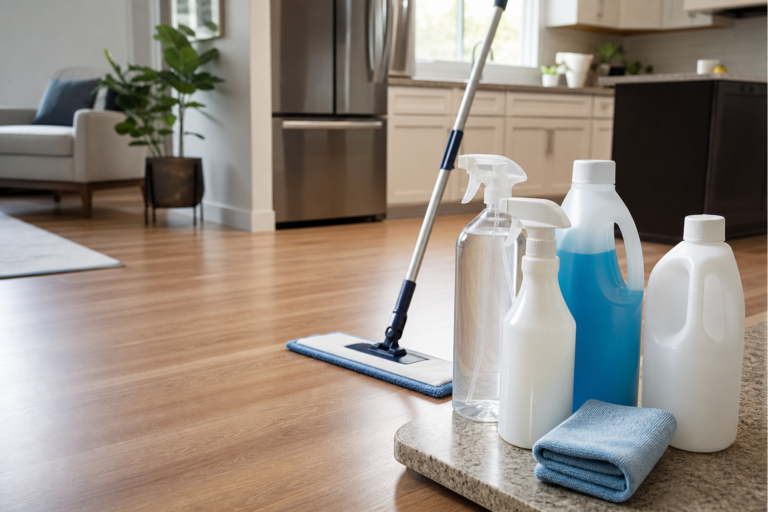

The best floor cleaning products are not always the strongest ones. A floor can stay cloudy, sticky, or streaky after mopping because the cleaner is too concentrated, the mop is too wet, the pad is dirty, or the product is wrong for the floor finish.
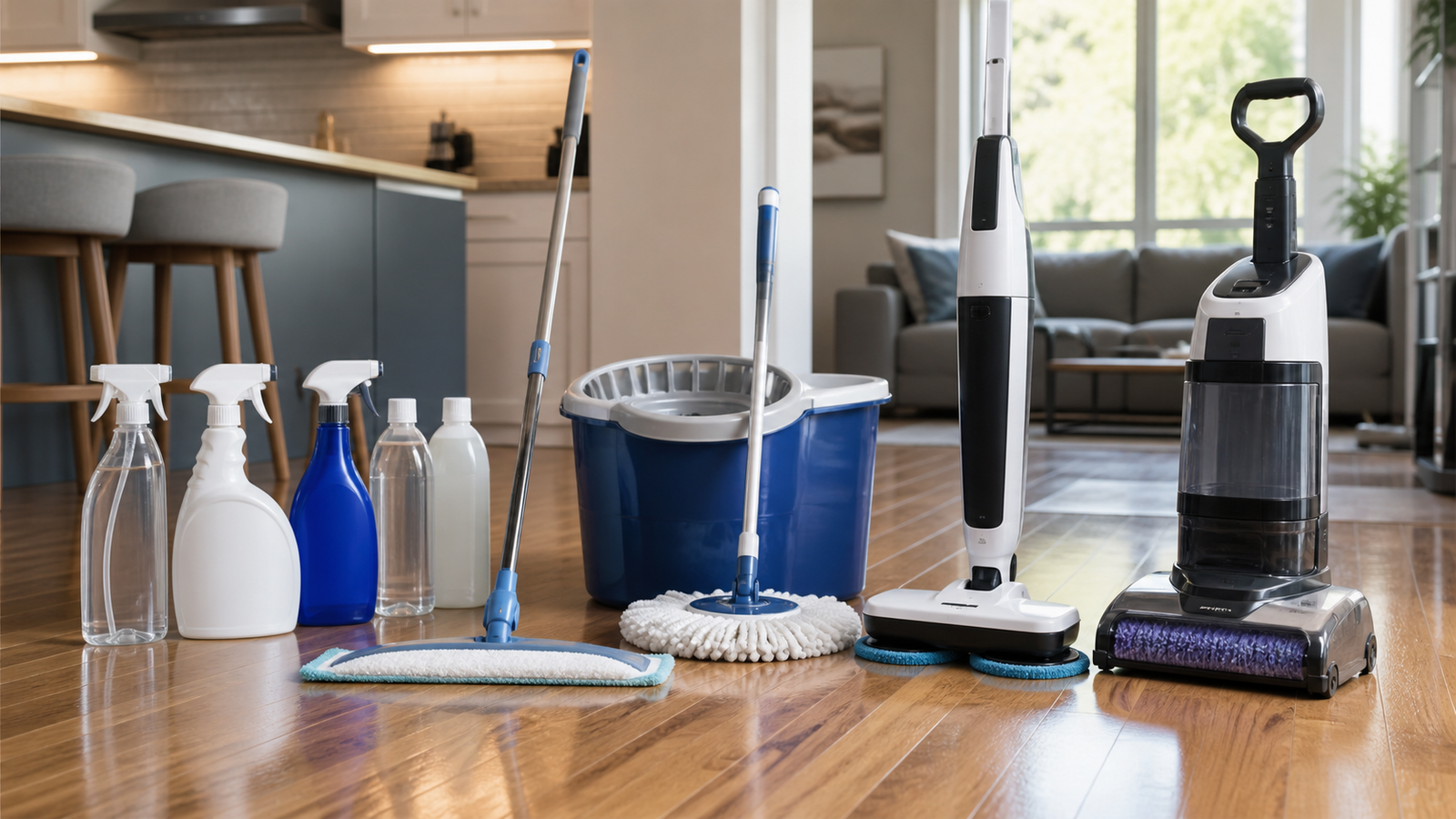
That is why this guide treats floor cleaning as a matching problem. A low-residue cleaner is the right answer for light daily grime. A wet-dry machine makes more sense for pet tracks and kitchen spills. A spin mop helps when dirty water is the problem. A grout cleaner belongs on grout lines, not across the whole floor.
Before buying anything, identify your floor type: sealed hardwood, laminate, LVP, tile, stone, or mixed hard floors. Then match the product to the mess instead of hoping one bottle solves everything.
Quick Picks: Best Floor Cleaning Products by Job
| Pick | Best for | Why it works | Main tradeoff |
|---|---|---|---|
| Best Overall Multi-Surface Cleaner: Quick Shine Multi Surface Floor Cleaner | One ready-to-use cleaner for many sealed hard floors | Streak-free, no-rinse, and made for hardwood, laminate, LVP, tile, and stone | Do not confuse it with Quick Shine floor finish or polish |
| Best Low-Residue Cleaner: Bona Multi-Surface Floor Cleaner | Sealed hard floors that look hazy after mopping | pH-neutral, fast-drying, and positioned around residue-free cleaning | Will not fix grout, wax buildup, or finish damage |
| Best Gentle Everyday Cleaner: Better Life Floor Cleaner | Frequent light cleaning with a softer feel | Works on many sealed floors and targets smudges, spills, foot traffic, and pet drool | Still leaves film if overused |
| Best Machine for Wet Messes: Bissell CrossWave HydroSteam | Kitchens, pets, muddy entries, and wet spills | Vacuums, washes, and steams while collecting dirty water | Requires tank and brush cleanup after use |
| Best Powered Mop: Bissell SpinWave Cordless Pet | Easier mopping after sweeping or vacuuming | Powered pads reduce scrubbing effort and on-demand spray limits liquid | Does not vacuum debris or rescue grout |
| Best Mop System for Cleaner Water: O-Cedar EasyWring RinseClean Spin Mop | People who prefer a bucket mop | Separates clean and dirty water better than a single-bucket routine | Sensitive floors still need a barely damp mop |
| Best Grout Rescue Product: Zep Grout Cleaner and Brightener | Dark tile grout lines | Targets grout discoloration directly | Strong targeted cleaner, not daily whole-floor cleaner |
If the floor is generally clean but looks dull, start with Quick Shine, Bona, or Better Life and use less product than you think. If the floor gets wet messes, the CrossWave HydroSteam is the more serious tool. If the tile surface is clean but the room still looks dirty, the grout lines may need Zep instead of another regular floor cleaner.

How to Choose the Right Floor Cleaning Product
The first decision is not brand. It is floor type. Sealed tile, sealed vinyl plank, laminate, stone, and hardwood do not all tolerate the same cleaner, the same water level, or the same tool. A product that works beautifully on ceramic tile can be too wet or too harsh for laminate. A cleaner that is safe for sealed hardwood may be too mild for stained grout.
The second decision is mess type. Dust, pet hair, and grit need dry removal before liquid cleaning. Footprints and light kitchen film need a low-residue floor cleaner. Sticky spills need either patient microfiber work or a machine with enough agitation. Dark grout needs a grout cleaner and a brush. Old polish or wax buildup is its own problem.
The third decision is cleaning style. Ready-to-use sprays are convenient and reduce dilution mistakes. Concentrates can be cheaper over time, but only if you measure them correctly. Spin mops feel familiar, but the mop head must be wrung well. Vacuum mops are excellent for wet messes, but they add cleanup work because dirty tanks and brush rolls cannot be ignored.
Most streaks and cloudy patches come from the process, not from the absence of a stronger chemical. Sweep or vacuum first. Use a clean pad. Use less cleaner. Work in smaller sections. Let the floor dry before walking on it. If the floor still looks wrong, check whether the issue is grout, product buildup, floor damage, or a cleaner that does not match the surface.
Also keep cleaner and polish separate. A cleaner removes soil. A polish, finish, or restorer leaves a layer behind to change shine. That layer can be useful in the right situation, but it can also create haze if it is applied over residue or mixed with an incompatible cleaner.
Best Overall Multi-Surface Cleaner: Quick Shine Multi Surface Floor Cleaner
Quick Shine Multi Surface Floor Cleaner is the best starting point if you want one ready-to-use cleaner for several sealed hard floors. The product page describes it as streak-free, no-rinse, and usable on hardwood, laminate, luxury vinyl plank, tile, and stone. That broad surface range is what makes it useful in homes where the kitchen, hallway, bathroom, and living area do not all have the same flooring.
The important detail is choosing the cleaner version, not the floor finish or polish. Quick Shine sells multiple floor-care products, and they do different jobs. The cleaner is for routine dirt and footprints. A finish or polish is for adding shine and leaving a layer behind. Mixing those jobs casually is how some floors end up cloudy or streaky.
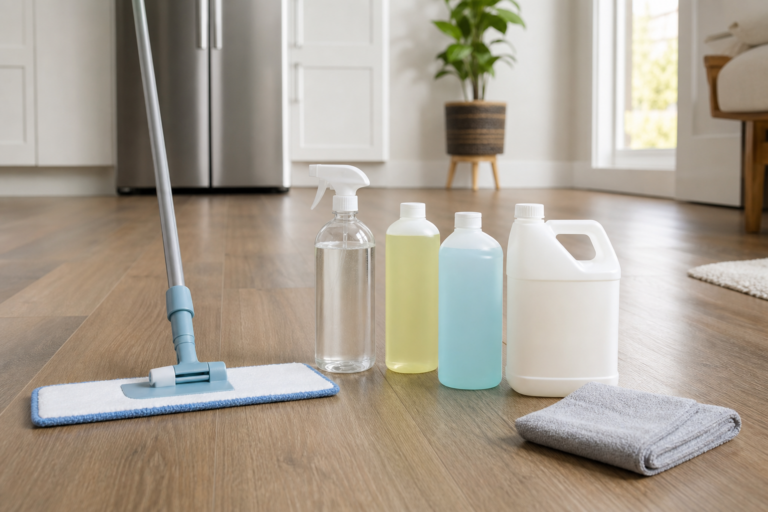
Use this cleaner lightly with a microfiber mop or compatible spray mop. It is ready to use, so adding extra cleaner is not a shortcut to a cleaner floor. If the pad starts looking dirty, change or rinse it. If a floor is already coated with old polish, a routine cleaner may not be enough to reset the surface.
Quick Shine is strongest for everyday maintenance across mixed sealed floors. It is not the best pick for unsealed wood, natural stone that requires a specific cleaner, stained grout, or floors with unknown wax buildup.
Best Low-Residue Cleaner: Bona Multi-Surface Floor Cleaner
Bona Multi-Surface Floor Cleaner is the best pick when residue is the main complaint. Bona describes its floor cleaners as pH-neutral, fast-drying, and residue-free, and the multi-surface version is made for sealed hard floors such as stone, tile, laminate, and LVT. That makes it a good choice when the floor is not filthy, but it never feels clean after mopping.
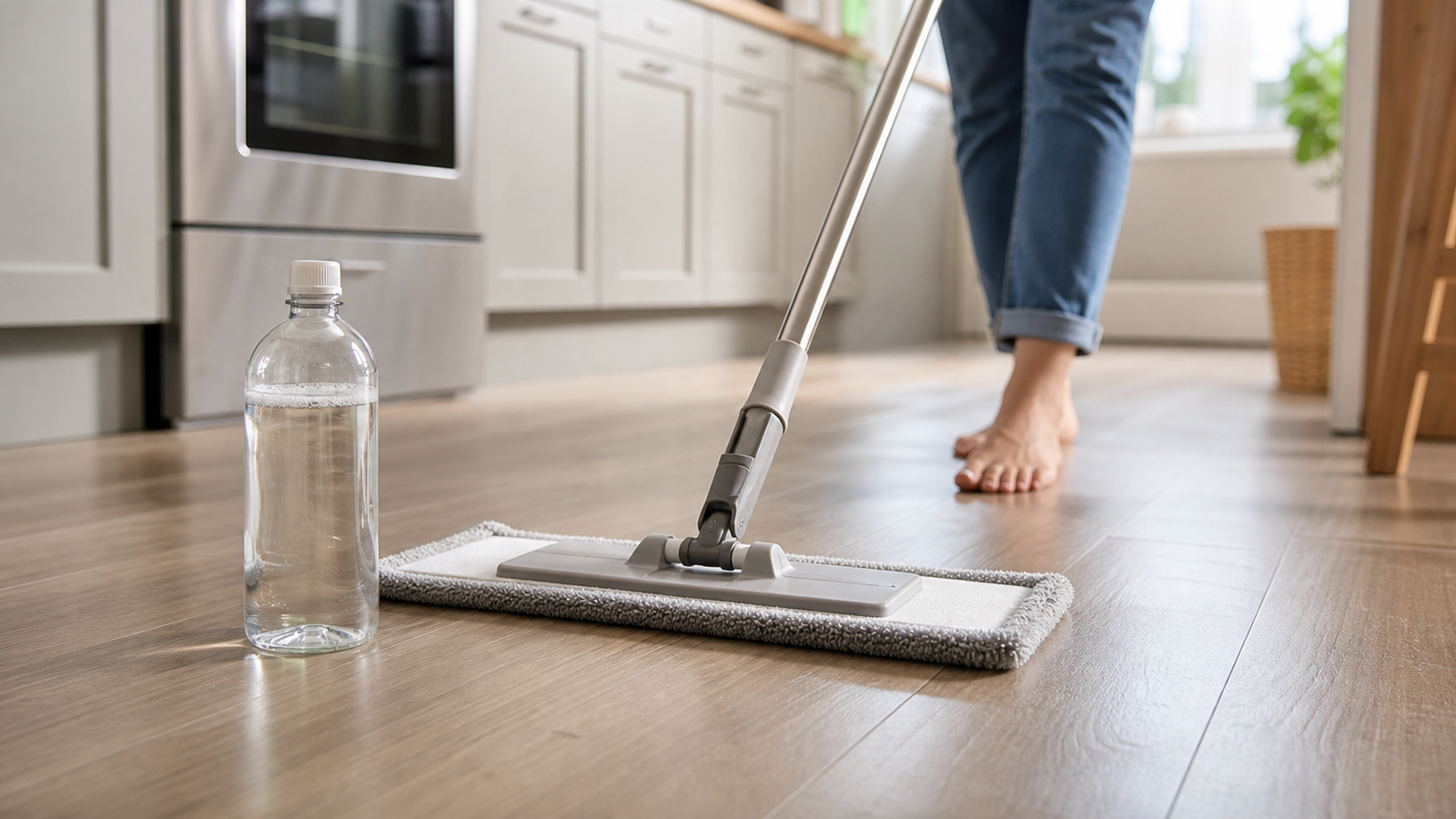
The cleaner works best as part of a low-moisture routine. Vacuum or sweep first. Spray lightly. Use a clean microfiber pad. Avoid soaking seams, especially on laminate, LVP, and wood-look flooring. If a surface looks cloudy after drying, resist the urge to add more cleaner on the next pass. More product usually creates more residue.
Bona is not a grout treatment. It will freshen tile surfaces, but dark grout lines need brush contact and a grout-specific product. It is also not a wax remover. If the floor has layers of old polish, shine product, or oil soap residue, a daily cleaner may not cut through the buildup quickly.
Choose Bona if you want a low-risk cleaner for routine hard-floor maintenance and you care more about a clean dry finish than fragrance or heavy degreasing. It is the quiet, practical choice in this group.
Best Gentle Everyday Cleaner: Better Life Floor Cleaner
Better Life Floor Cleaner is the better fit when you clean often and want the product to feel easier to live with. The product page says it works on hardwood, tile, marble, laminate, vinyl, and other sealed floors, and that it targets smudges, foot traffic, spills, and pet drool without streaks or haze.
That makes it a strong everyday cleaner for homes where the mess is real but not extreme. It belongs in the weekly or twice-weekly routine: kitchen footprints, light sticky spots, bathroom traffic, and the dullness that shows up after people and pets move through the house.
The practical caution is that gentle does not mean impossible to overuse. If a floor feels tacky after mopping, the issue may be too much product, a dirty pad, or not removing dry debris first. A softer cleaner still needs a clean mop and controlled amount.
Better Life is also useful when scent and comfort matter. Some people clean more consistently when the product does not smell harsh. That can make it a better real-world choice than a stronger cleaner that stays under the sink.
Choose it for sealed floors that need frequent light cleaning. Do not choose it as a grout rescue product, wax remover, or replacement for a wet-dry machine when the floor gets regular wet messes.
Best Machine for Wet Messes: Bissell CrossWave HydroSteam
The Bissell CrossWave HydroSteam is the pick when a normal mop mostly spreads the mess around. It is built as a wet-dry hard-floor machine that vacuums, washes, and steams. That combination matters in kitchens, pet areas, entryways, and homes where crumbs, liquid, and tracked-in dirt show up together.
The biggest benefit is dirty-water pickup. With a normal mop, soil can stay in the pad or bucket and go back across the floor. A wet-dry machine pulls liquid and debris into a dirty tank, which can make the floor feel cleaner after real messes.
The tradeoff is maintenance. The dirty tank, brush roll, filter area, and machine parts need cleaning after use. If you leave dirty water or damp parts sitting, the machine can smell or become unpleasant to use. A vacuum mop saves effort on the floor but adds a cleanup step at the sink.
It is also not a magic answer for seams and grout. Reddit floor-cleaning discussions around CrossWave-style machines often point out that dirt can remain in plank seams or textured areas. That does not make the machine useless; it means detail areas still need targeted work.
Choose the CrossWave HydroSteam if wet messes, pets, and kitchen cleanup are common. Skip it if your floor only needs light dust and footprints removed.
Best Powered Mop: Bissell SpinWave Cordless Pet
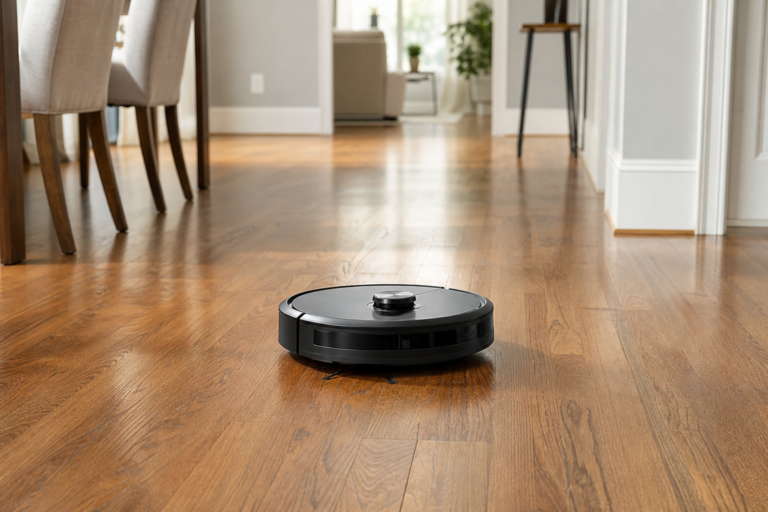
The Bissell SpinWave Cordless Pet is the better choice when the floor has already been swept or vacuumed but mopping still feels like too much work. It uses powered spinning pads and on-demand spray, and the product page lists 20 minutes of cordless runtime for sealed hard floors.
This is not a wet-dry vacuum. It will not pick up cereal, muddy puddles, or dirty liquid the way the CrossWave can. It is a powered mop, which means its advantage is agitation. The pads do the scrubbing motion while you guide the machine.
That makes it useful for light sticky spots, pet footprints, and larger open hard-floor areas. It is especially helpful for people who dislike pushing a manual mop back and forth. On-demand spray also gives more control than a bucket, as long as you do not hold the trigger constantly.
Maintenance still matters. Wash the pads. Empty the tank. Let damp parts dry. A powered mop with dirty pads will not produce a clean floor.
Choose the SpinWave if you want easier routine mopping on sealed hard floors. Choose the CrossWave if you need suction and dirty-water pickup.
Best Mop System for Cleaner Water: O-Cedar EasyWring RinseClean Spin Mop
The O-Cedar EasyWring RinseClean Spin Mop is for people who want a bucket mop but hate dragging dirty water across the floor. The product page describes a two-chamber bucket that separates clean and dirty water, with a microfiber mop head for finished hardwood, wood, laminate, tile, and vinyl.
The design solves a common mopping problem: one bucket slowly becomes dirty soup. Separating cleaner water from dirtier rinse water makes the routine feel more logical, especially for larger rooms or visibly dirty floors.
The system still depends on technique. Reddit discussions around the RinseClean bucket often focus on how the water flow works and whether the process is truly clean. The useful takeaway is that the tool helps, but it does not replace rinsing, wringing, changing water when needed, and using the right amount of cleaner.
For hardwood, laminate, and LVP, the mop should be barely damp, not wet. The spin wringer is an advantage because it helps remove excess water. On tile, you can be a little more flexible, but standing water is still rarely useful.
Choose O-Cedar if you prefer a traditional mop and want cleaner water control. Choose a spray mop if you want the tool to limit water even more.
Best Grout Rescue Product: Zep Grout Cleaner and Brightener
Zep Grout Cleaner and Brightener is the right product when the tile itself is clean but the grout lines still make the floor look dirty. Regular floor cleaners are designed to move across the surface. Grout cleaners are designed for the porous lines between tiles.
This is a targeted cleaner, not a daily mop solution. Apply it to grout lines according to the label, let it work briefly, agitate with a grout brush, and wipe or rinse thoroughly. The result can look more dramatic than switching from one general floor cleaner to another because grout has such a big visual effect on tile floors.
The caution is compatibility. Strong grout cleaners can be acidic and may not be safe for natural stone, sensitive tile, metal trim, or unsealed surfaces. Spot-test first and protect nearby materials. If you have marble, limestone, travertine, or other acid-sensitive stone, use a stone-safe cleaner instead.
Choose Zep when the problem is dark grout. Do not use it as a whole-floor weekly cleaner, and do not expect it to replace sweeping, mopping, or a machine for fresh spills.
What Not to Use on Floors
The wrong cleaning product can create a problem that looks like dirt but is actually damage or residue. Steam, vinegar, bleach, ammonia, abrasive scrubbers, oil soap, wax, and too much detergent all need caution.
Steam can be useful on some sealed tile, but it is risky on hardwood, laminate, and many vinyl plank floors because heat and moisture can work into seams, adhesives, and weak spots. If a floor manufacturer warns against steam, follow that guidance.
Vinegar is another common mistake. It is often suggested as a universal cleaner, but acid can be a poor match for natural stone, some finishes, and repeated use on sensitive floors. A compatible neutral cleaner is safer for routine mopping.
Bleach and ammonia can be too harsh for many finished floors and can discolor or dull surfaces. Abrasive scrubbers can scratch. Oil soap and wax can leave film on floors that were not designed for them. Even a mild cleaner can leave streaks if the dilution is too strong.
The safest default is boring but effective: remove dry debris first, use a compatible cleaner, use less liquid, keep the mop clean, and let the floor dry before walking on it.
Real-World Lessons from Floor Cleaning Owners
Owner discussions make one point very clear: the mop routine matters as much as the bottle. People often blame the cleaner when the real issue is dirty water, too much solution, or a mop that is still dripping.
Streaks usually come from excess moisture, residue, or a pad that needs washing. A floor can also look cloudy if different products are layered together, especially when a cleaner is used over a polish or shine product. That is why Quick Shine cleaner and Quick Shine finish should be treated as separate products with different jobs.
O-Cedar-style spin mops get attention because they make dirty water visible. That visibility can be helpful. Once you see how quickly rinse water changes color, it becomes obvious why a single dirty bucket can leave floors dull. The RinseClean system helps, but technique still decides the result.
CrossWave-style machines earn praise when they pick up dirty liquid that a mop would spread. The tradeoff is cleanup. Tanks, brushes, and filters have to be washed and dried, or the machine becomes its own chore.
The most practical lesson is to start lighter. Less cleaner, less water, a cleaner pad, and a dry debris pass solve more floor problems than buying the strongest product on the shelf.
Final Verdict: Which Floor Cleaning Product Should You Buy?
For most sealed hard floors, start with Quick Shine Multi Surface Floor Cleaner if you want one ready-to-use cleaner across several floor types. Choose Bona Multi-Surface Floor Cleaner if residue and fast drying are your biggest concerns.
Choose Better Life Floor Cleaner for frequent light cleaning with a gentler feel. Choose Bissell CrossWave HydroSteam if wet messes, pets, and kitchen spills are common. Choose Bissell SpinWave Cordless Pet if the floor is swept but you want easier powered mopping.
Choose O-Cedar EasyWring RinseClean Spin Mop if dirty mop water is the problem, and choose Zep Grout Cleaner and Brightener when dark grout lines are making clean tile look dirty.
FAQ
What is the best product to clean floors with?
For most sealed hard floors, the best setup is a low-residue floor cleaner and a clean microfiber mop. If the floor has wet spills or pet messes, a wet-dry machine may be better. If grout lines are dark, use a grout cleaner. The right product depends on the floor type and the mess, not just the brand.
Why are my floors still dirty after mopping?
Floors often stay dirty after mopping because dry debris was not removed first, the mop water is dirty, the mop is too wet, too much cleaner was used, or the problem is actually grout or old residue. Try vacuuming first, using less solution, changing pads or water more often, and letting the floor dry fully.
Is vinegar good for cleaning floors?
Vinegar is not a universal floor cleaner. It may be acceptable on some durable surfaces when properly diluted, but it can be risky on natural stone, wood finishes, laminate, vinyl plank seams, and other sensitive floors. A compatible neutral cleaner is usually safer for routine floor cleaning.
Are vacuum mops worth it?
Vacuum mops are worth it when floors get wet messes, pet tracks, kitchen spills, or mixed crumbs and liquid. They save effort because they collect dirty water instead of pushing it around. They are less useful for simple dust and footprints, and they require regular cleaning of tanks, brushes, and filters.
Should I use a steam mop?
Steam mops can be useful on some sealed tile, but they are risky on hardwood, laminate, and many vinyl plank floors. Heat and moisture can work into seams or damage finishes over time. If the flooring manufacturer does not clearly allow steam, use a low-moisture cleaner and microfiber mop instead.