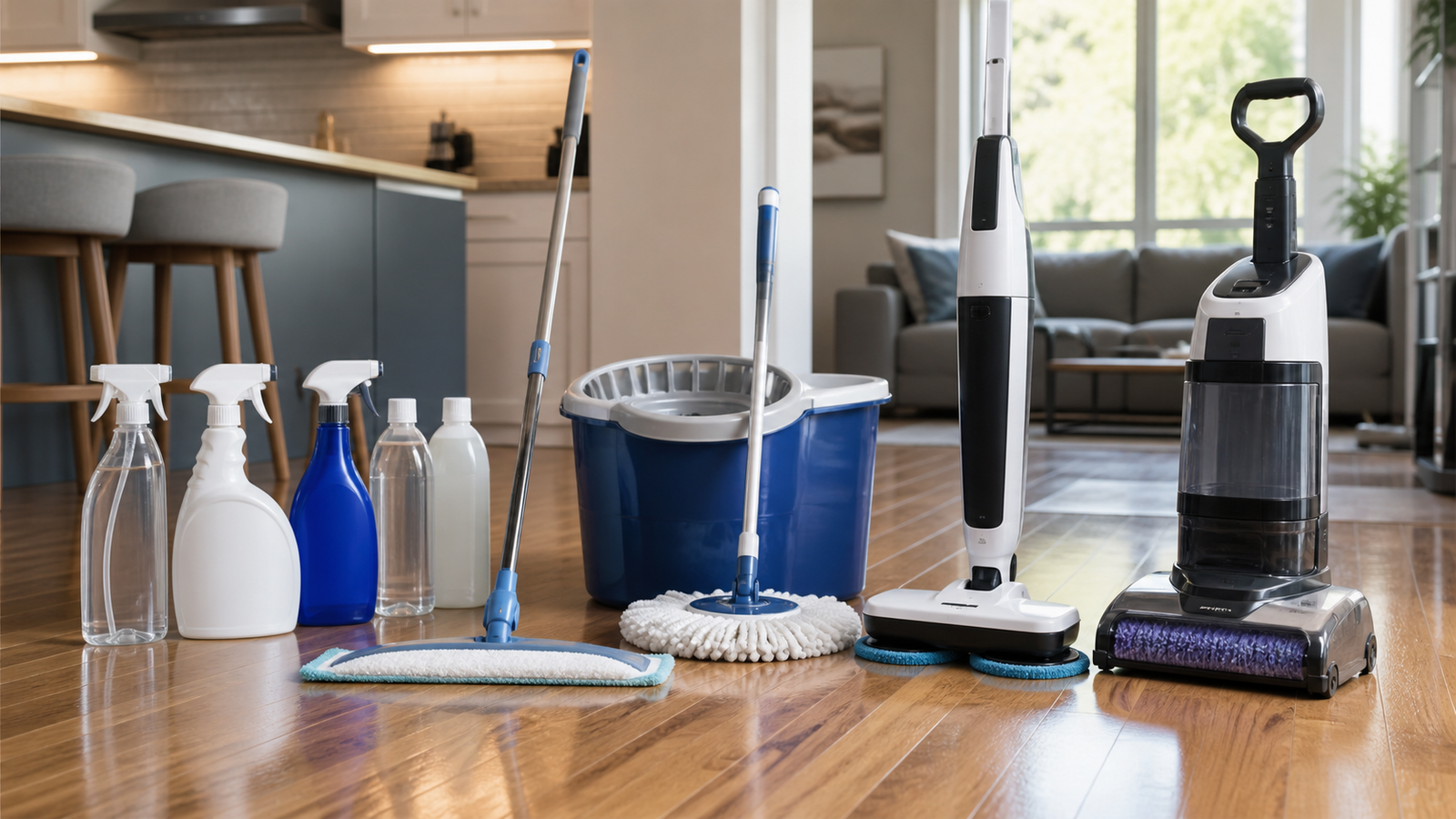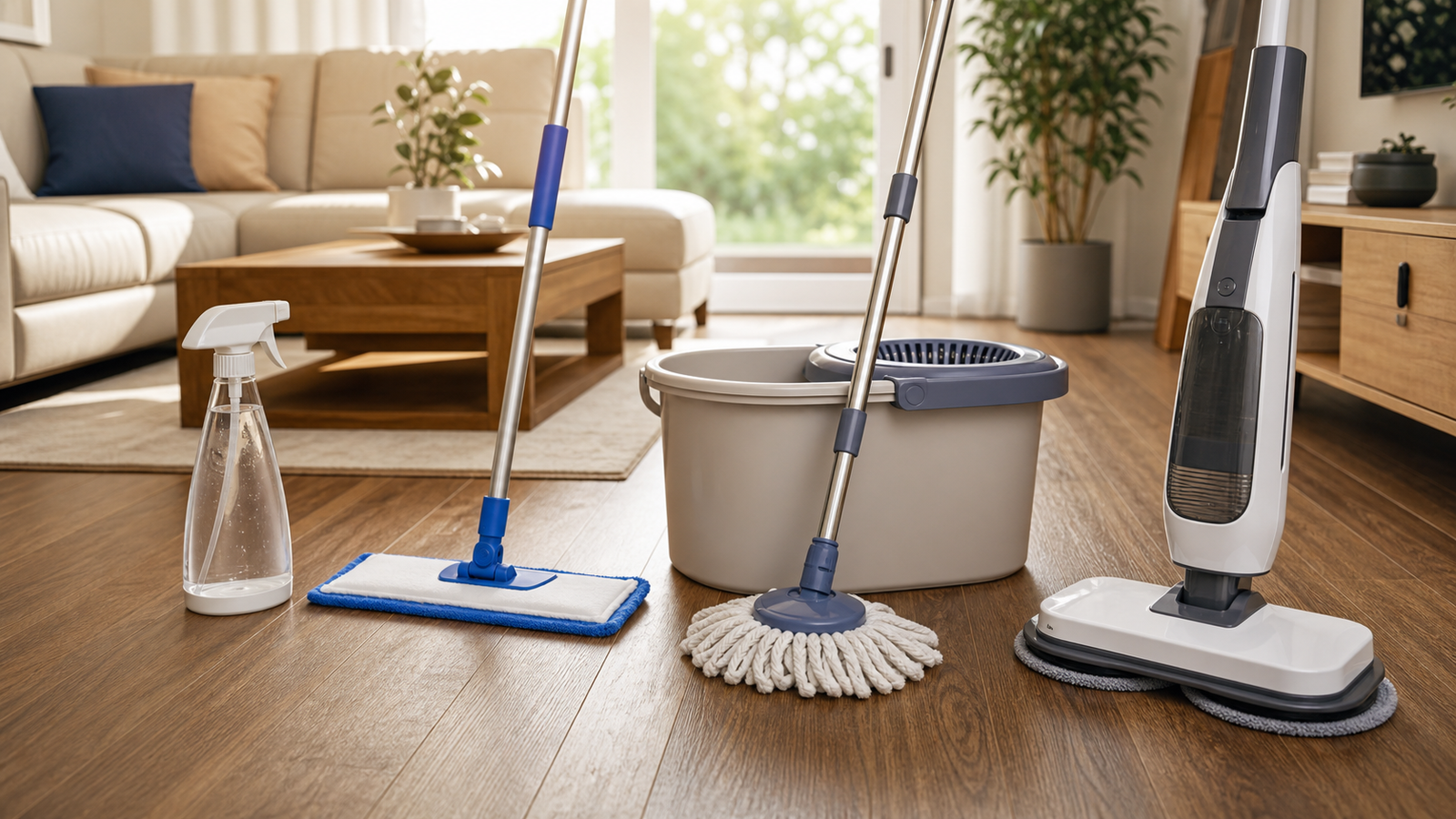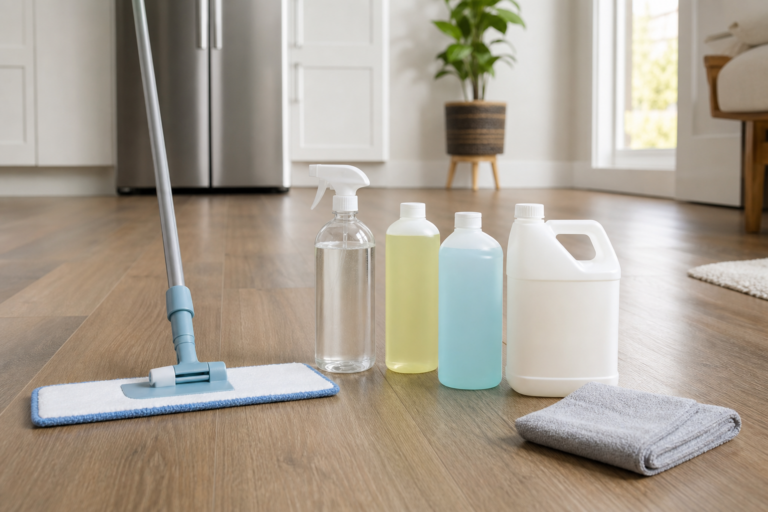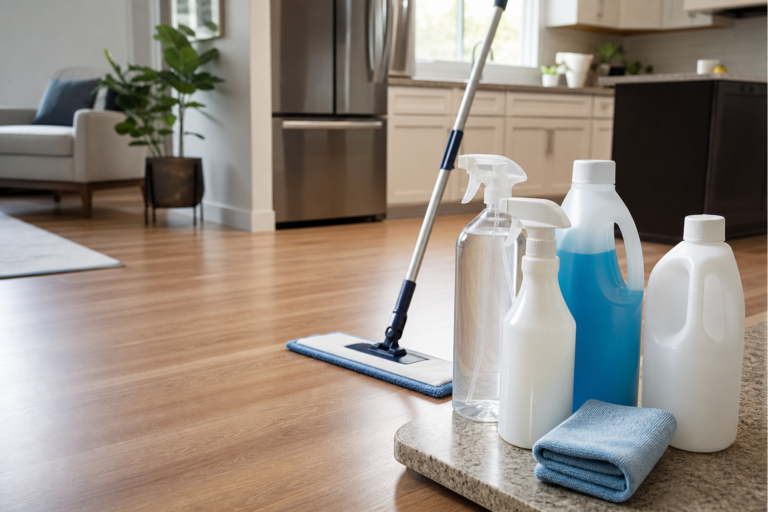

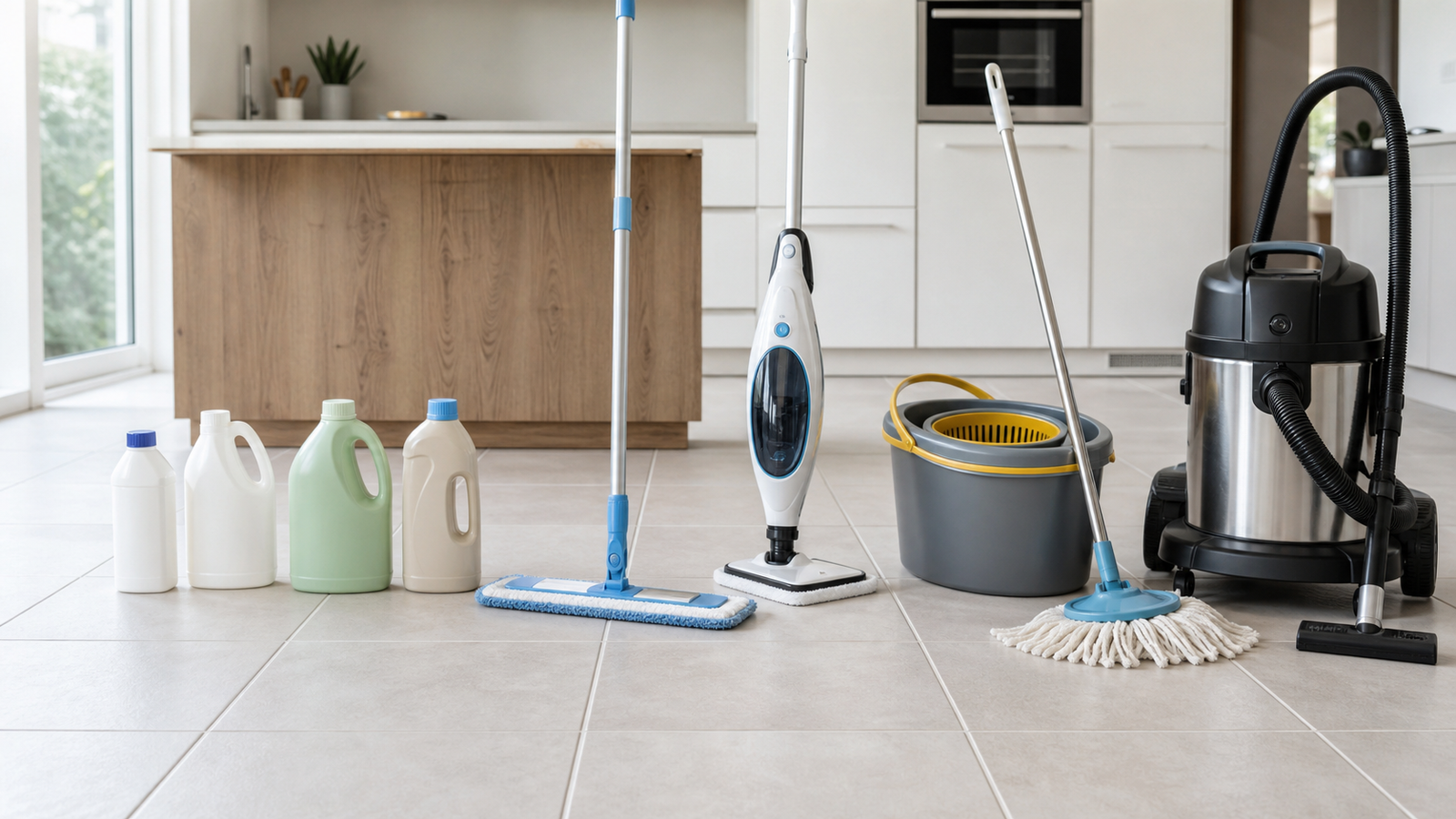
Tile floors can handle daily life, but they are easy to clean badly. Too much product leaves a film. Dirty mop water puts soil back down. A strong acidic formula may brighten grout while damaging natural stone. A wet-dry machine can pick up a kitchen spill but still leave the grout untouched.
The best tile floor cleaner depends on the tile and the mess. Sealed ceramic and porcelain usually need a low-residue cleaner for routine maintenance. Marble, travertine, slate, and other natural stone need a compatible formula. Wet pet or kitchen messes benefit from dirty-water pickup. Dark grout needs its own targeted treatment.
This guide separates those jobs so you can solve the actual problem instead of buying a stronger cleaner that creates a new one.
Quick Picks: Best Tile Floor Cleaners by Job
| Pick | Best for | Why it works | Main tradeoff |
|---|---|---|---|
| Best Everyday Cleaner: Bona Multi-Surface Floor Cleaner | Routine sealed ceramic and porcelain tile | Ready to use, fast drying, and focused on low-residue hard-floor cleaning | Not designed for grout haze or deeply stained grout |
| Best for Natural Stone Tile: Black Diamond Stoneworks Marble & Tile Floor Cleaner | Marble, travertine, granite, slate, ceramic, and porcelain | Concentrated formula made for stone and tile without relying on aggressive acid | Sticky grime may need extra agitation |
| Best Gentle Everyday Formula: Better Life Floor Cleaner | Frequent light cleaning in kitchens and pet areas | Convenient squirt-and-mop formula for sealed floors | Can still leave film if over-applied |
| Best Machine for Wet Messes: Bissell CrossWave HydroSteam | Kitchen spills, muddy tracks, and pet traffic | Vacuums, washes, and collects dirty water instead of spreading it | Tanks and brush roll need cleaning after use |
| Best Steam Mop for Sealed Tile: Bissell PowerFresh Steam Mop | Compatible sealed ceramic and porcelain tile | Uses adjustable steam and a washable pad without adding floor detergent | Not appropriate for every stone, grout, adhesive, or floor warranty |
| Best Mop for Cleaner Water: O-Cedar EasyWring RinseClean Spin Mop | Larger tile areas and traditional bucket mopping | Separates clean and dirty water and lets you control mop moisture | Does not vacuum debris or scrub grout deeply |
| Best Grout Rescue: Zep Grout Cleaner and Brightener | Stained grout on compatible tile floors | Strong targeted formula reaches the part regular mopping misses | Acidic, requires careful application and thorough rinsing |
For ordinary sealed ceramic or porcelain, Bona is the easiest place to start. Black Diamond is the safer fit when natural stone is involved. CrossWave HydroSteam earns its space when the floor gets wet messes, while Zep should be reserved for grout rather than poured across the tile.

Match the Cleaner to the Tile, Not Just the Dirt
Ceramic and porcelain are often grouped together, but the floor may also include grout, sealer, natural-stone accents, metal trim, or an older finish. The cleaner must be compatible with the whole surface, not only the tile body.
Sealed ceramic and porcelain are generally the easiest to maintain. Remove grit first, then use a low-residue cleaner with microfiber. A stronger formula is rarely necessary for weekly footprints and cooking film.
Natural stone needs more caution. Marble, limestone, travertine, and similar stone can react badly to acidic products such as vinegar or strong grout cleaners. A pH-compatible stone-and-tile cleaner is a safer default, and any existing sealer should be considered.
Grout is its own surface. It is more porous than tile and can remain dark even when the tile face is clean. A normal floor cleaner handles fresh surface soil but may not lift years of contamination from grout. That job needs targeted cleaner, brush contact, and rinsing.
Construction residue is another separate problem. Grout haze, thinset marks, sealer buildup, and old polish do not behave like ordinary household dirt. A Reddit discussion about new porcelain tile illustrates the distinction: a routine Bona cleaner did not remove marks believed to be grout or thinset haze. That is a product-limit issue, not evidence that Bona fails at weekly cleaning.
Whatever the tile type, begin dry. Vacuum or sweep dust, grit, hair, and crumbs before adding liquid. Use a clean pad or mop head, measure concentrates correctly, and change dirty water before it turns the cleaning pass into soil redistribution.
Best Everyday Cleaner: Bona Multi-Surface Floor Cleaner
Bona Multi-Surface Floor Cleaner is the best default for sealed tile that needs regular maintenance rather than restoration. It is a ready-to-use hard-floor cleaner aimed at stone, tile, laminate, and related sealed surfaces.
Its main advantage is control. There is no dilution to guess, and a light spray works well with a clean microfiber pad. That makes Bona useful in kitchens, bathrooms, entryways, and laundry rooms where the floor mostly collects footprints, dust, light cooking residue, and everyday spills.
Use less than the impulse suggests. A few passes over a small working area are better than saturating the floor. If the tile feels tacky after drying, inspect the pad, the amount of product, and any older residue before adding more cleaner.
Tile-cleaning discussions sometimes recommend Bona for sealed tile and stone, but they also show its limits. Bona is not a grout-haze remover, a grout brightener, or a heavy degreaser. It cannot correct a damaged sealer or years of polish buildup.
Choose Bona when the tile is already in reasonable condition and you want a straightforward weekly cleaner. Choose a different category when the problem is natural-stone compatibility, standing liquid, construction haze, or dark grout.
Best for Natural Stone Tile: Black Diamond Stoneworks Marble & Tile Floor Cleaner
Black Diamond Stoneworks Marble & Tile Floor Cleaner is the strongest choice here for a home with natural-stone tile. It is designed for surfaces such as marble, travertine, granite, slate, ceramic, and porcelain, which makes it more appropriate than improvised acid-based recipes.
The concentrated format lets you adjust the mix within the label directions. That is useful for a large stone kitchen or several tiled rooms, but measuring matters. More concentrate does not automatically mean a cleaner or shinier floor.
In Bob Vila's hands-on testing, Black Diamond performed well for light cleaning on natural stone and tile. Sticky grime needed more effort, which is an important expectation. A stone-compatible maintenance cleaner should protect the surface first; it is not meant to behave like a caustic degreaser or acidic grout treatment.
The best routine is to vacuum first, mix the recommended amount, and mop with clean microfiber. If the floor has greasy buildup, soap scum, or dark grout, isolate that problem rather than increasing the concentration across the whole stone surface.
Choose Black Diamond when you need one compatible concentrate for natural stone and tile. It is less compelling for someone with only standard sealed porcelain who prefers a ready-to-use spray.
Best Gentle Everyday Formula: Better Life Floor Cleaner
Better Life Floor Cleaner fits homes that mop frequently and want a lighter everyday formula. It is intended for sealed floors and routine messes such as footprints, smudges, small spills, and pet drool.
The squirt-and-mop format is simple: apply a small amount, spread it with a clean microfiber mop, and allow the floor to dry. It works best when the tile is already in decent condition and the goal is maintenance rather than a dramatic reset.
The word "gentle" should not be confused with "impossible to overuse." Any floor cleaner can leave film when too much is applied or when the mop pad is already saturated with soil. If the tile develops drag or tackiness, reduce the amount and wash the pad before changing products.
Fragrance is also personal. A cleaner that feels pleasant to one household may be too scented for another. Test it in a smaller area before using it throughout an open-plan room.
Choose Better Life for frequent light cleaning on sealed tile, particularly in busy family or pet areas. Choose Black Diamond for natural stone, CrossWave for wet messes, or Zep when the visual problem is inside the grout lines.
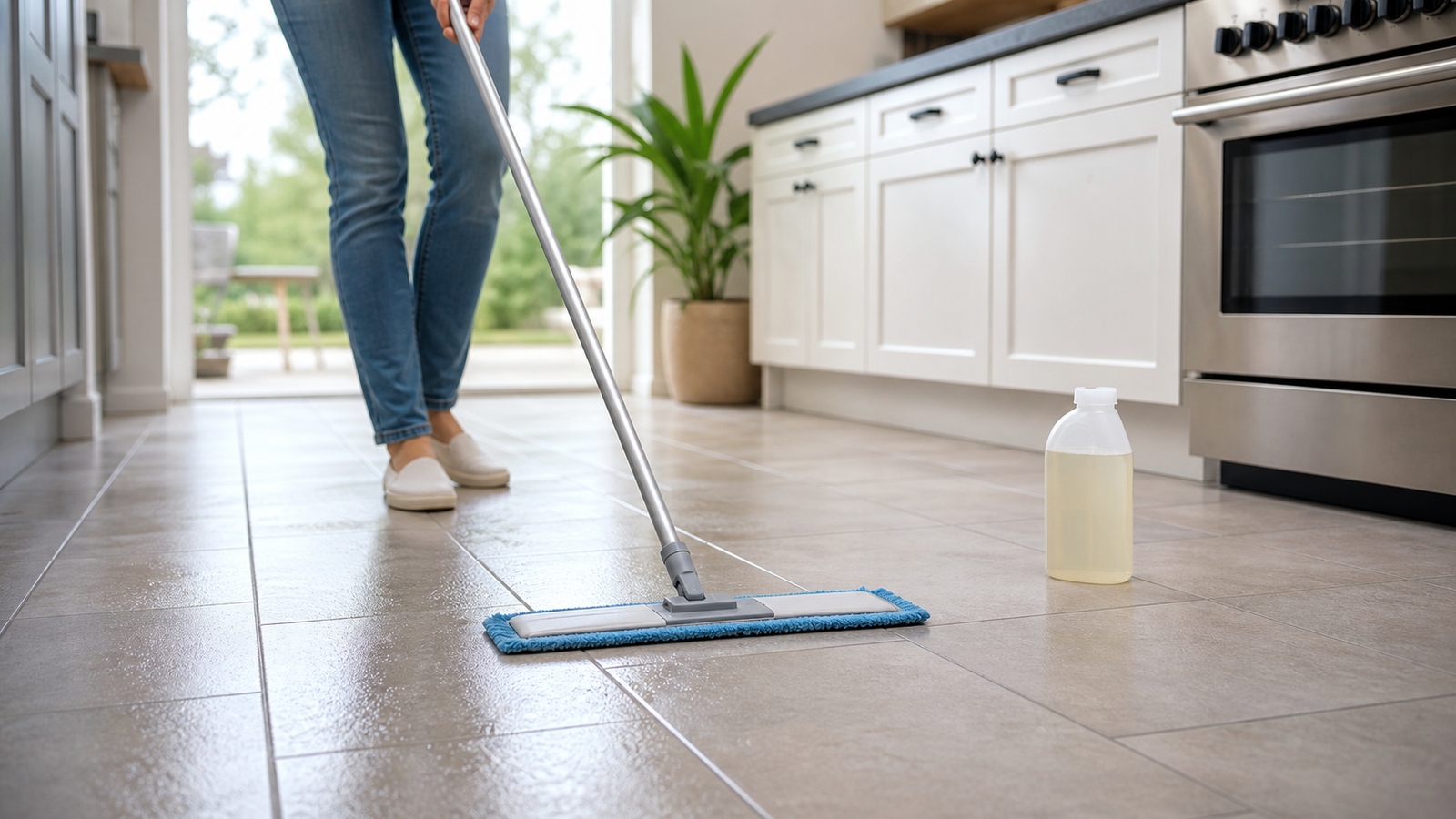
Best Machine for Wet Messes: Bissell CrossWave HydroSteam
Bissell CrossWave HydroSteam is the right tool when a spray cleaner and mop mostly move the mess around. It combines vacuum pickup, washing, and steam for compatible sealed hard floors, then collects dirty liquid in a separate tank.
That makes a real difference in kitchens and pet households. Crumbs, muddy footprints, spilled drinks, and wet food messes involve both solids and liquid. A conventional mop leaves the debris for another step and can spread dirty water into grout.
A 2026 home review found that the machine picked up a fresh kitchen spill quickly without visible residue after one pass. That is the scenario where the CrossWave earns its storage space: recent, mixed messes over a substantial area.
The tradeoff comes after cleaning. Empty and rinse the dirty-water tank, clean the brush roll and cover, and let the parts dry. Skipping that routine can create odors and reduce performance. The machine saves work on the floor but adds maintenance at the sink.
CrossWave is not a grout-restoration machine. The brush roll moves across the tile face and may not reach deeply into recessed grout. Choose it for mess pickup and regular maintenance, not as a replacement for a grout brush.
Best Steam Mop for Sealed Tile: Bissell PowerFresh Steam Mop
Bissell PowerFresh Steam Mop is useful when sealed ceramic or porcelain tile looks cloudy after repeated use of detergent. It uses adjustable steam, a washable pad, and a flip-down scrubber for compatible sealed hard floors.
Steam can loosen light sticky residue without adding another cleaning formula. It is especially practical for a sealed kitchen or bathroom floor where the tile manufacturer allows steam and the grout is in good condition.
Compatibility is the deciding factor. Steam should not be treated as universally safe because a surface looks like tile. Natural stone, weak sealant, loose tile, damaged grout, moisture-sensitive underlayment, and some adhesives may not tolerate heat and moisture. Flooring guidance and warranty terms take priority.
The pad still needs changing. Steam loosens soil, but the microfiber has to carry it away. Continuing across a large floor with a dirty pad can leave streaks just as a conventional mop can.
Choose PowerFresh when detergent residue is the main frustration and the floor is confirmed steam-safe. Choose CrossWave when you need suction and dirty-water pickup, or a liquid cleaner when the floor type makes steam uncertain.
Best Mop for Cleaner Water: O-Cedar EasyWring RinseClean Spin Mop
O-Cedar EasyWring RinseClean improves the traditional bucket routine by separating clean water from dirty rinse water. That directly addresses one of the most common reasons a tile floor looks dull after mopping: the mop keeps returning soil to the surface.
The microfiber head works well across tile faces and can reach closer to edges than many machine heads. The foot-operated wringer also makes it easier to control moisture.
The system does not eliminate preparation. Vacuum or sweep first so grit and pet hair do not turn into muddy residue. Use the cleaner at the correct dilution, and replace the water when necessary even if the bucket design keeps the two sides separate.
Grout remains a limitation. A mop head passes over grout but does not provide the concentrated brush pressure needed for deeply stained lines. Clean the floor first, then decide whether the grout needs a separate treatment.
Choose O-Cedar if you like bucket mopping, have a larger tiled area, and want cleaner water throughout the job. Choose a spray cleaner for small rooms or a wet-dry machine for frequent liquid messes.
Best Grout Rescue: Zep Grout Cleaner and Brightener
Zep Grout Cleaner and Brightener is the specialized pick for grout that remains dark after the tile face is clean. Its acid-based pour format is suited to horizontal grout lines, where the product can stay in contact long enough to loosen embedded soil.
This is not a routine floor cleaner. Apply it only where the label permits, test an inconspicuous area, protect nearby materials, agitate according to directions, and rinse thoroughly. Do not use it on natural stone or any surface the manufacturer excludes.
The caution is supported by real ownership problems. One Reddit poster said the grout cleaned well but difficult residue remained on the tile. Another discussion describes tile damage or alteration after strong grout cleaner and abrasive technique. These are not reasons to declare the product unusable; they are reasons to treat it as a strong, targeted chemical rather than mop water.
Grout color can also change for reasons that are not simple dirt. Sealer, prior chemicals, moisture, mineral deposits, and worn grout may affect the result. If a test area behaves unexpectedly, stop rather than treating the whole room.
Choose Zep for compatible floor grout that needs a focused rescue. Use an acid-free grout cleaner when natural stone is present, and use Bona or another routine cleaner for normal weekly mopping afterward.
Why Tile Floors Look Cloudy or Sticky
Cleaner overdose is the first suspect. When too much product dries on the surface, it leaves a film that attracts soil and feels tacky. Adding even more cleaner compounds the problem.
Dirty mop water is another common cause. Once the bucket turns gray, the mop is no longer only removing soil. It is redistributing it across the floor and into grout lines.
Hard water can leave mineral spots or haze, especially on darker tile. A clean microfiber drying pass may help, but do not reach for acid until you know the tile and grout can tolerate it.
Construction residue looks similar to dirt but requires a different solution. Grout haze or thinset marks on newly installed porcelain will not necessarily respond to an everyday floor cleaner. Use the tile and grout manufacturer's post-installation guidance rather than escalating household products.
Old polish, sealer, wax, or incompatible cleaner can also create layers. Identify what was previously applied before using a stripper or restoration product.
The practical troubleshooting order is simple: vacuum, use clean microfiber, reduce the cleaner, change the water, test a small rinse pass, and inspect the grout separately. If the floor remains cloudy, investigate hard water, construction residue, or coating buildup before buying another general cleaner.
Real-World Tile Cleaning Lessons
Routine cleaners are best at routine jobs. Bona can remove everyday soil from sealed tile, but it should not be expected to remove grout haze from a recent installation. That distinction prevents wasted effort and excessive product use.
Natural stone rewards restraint. Black Diamond's stone-compatible formula performed well in hands-on tile testing, while sticky grime required more agitation. That is preferable to using an aggressive acid that may etch the stone.
Wet-dry machines solve a different problem. CrossWave can remove a fresh mixed spill quickly because it vacuums and washes together. The owner still has to clean the machine, and recessed grout may still need a brush.
Strong grout cleaner offers the most dramatic risk-reward tradeoff. Zep can brighten compatible grout, but visible Reddit reports of residue and surface problems reinforce the need for spot testing and thorough rinsing.
The broader lesson is that cleaner strength is not the same as cleaning quality. Correct surface matching, clean water, measured product, and the right tool usually matter more than buying the harshest formula.
Final Verdict: Which Tile Floor Cleaner Should You Buy?
For most sealed ceramic and porcelain floors, start with Bona Multi-Surface Floor Cleaner. Choose Black Diamond Stoneworks Marble & Tile Floor Cleaner when natural stone is part of the floor, or Better Life Floor Cleaner for frequent light cleaning on sealed tile.
Choose Bissell CrossWave HydroSteam for wet kitchen and pet messes. Choose Bissell PowerFresh Steam Mop only when the tile is confirmed steam-safe and detergent residue is the problem.
Choose O-Cedar EasyWring RinseClean Spin Mop for larger rooms and cleaner bucket water. Reserve Zep Grout Cleaner and Brightener for compatible grout lines that still look dirty after the tile is clean.
FAQ
What is the best thing to clean tile floors with?
For routine cleaning, use a cleaner compatible with the tile type and a clean microfiber mop after vacuuming or sweeping. Bona is a practical choice for sealed ceramic and porcelain. Natural stone should use a stone-compatible formula such as Black Diamond. Dark grout needs a separate grout cleaner and brush.
Can you use vinegar on tile floors?
Vinegar may be tolerated by some ceramic or porcelain tile, but it is not a universal tile cleaner. Its acidity can damage marble, limestone, travertine, grout, sealer, and other sensitive materials. A compatible pH-neutral cleaner is the safer routine choice when the complete floor construction is uncertain.
Are steam mops safe for tile floors?
Steam mops are suitable for some sealed ceramic and porcelain floors when the flooring manufacturer permits them. Avoid steam on natural stone, weak or damaged grout, loose tile, and moisture-sensitive installations. Check the floor-care instructions and warranty before using steam regularly.
Why are my tile floors cloudy after mopping?
Cloudiness often comes from too much cleaner, dirty mop water, hard-water minerals, an overloaded pad, old coating buildup, or grout haze from installation. Start with less product, clean microfiber, fresh water, and a small rinse test. Construction haze or coating buildup may require a specialized process.
What is the best cleaner for tile grout?
For compatible ceramic or porcelain floor grout, a targeted product such as Zep Grout Cleaner and Brightener can be effective. Spot-test first, follow the label, use a grout brush, and rinse thoroughly. Natural stone requires an acid-free grout cleaner approved for that material.