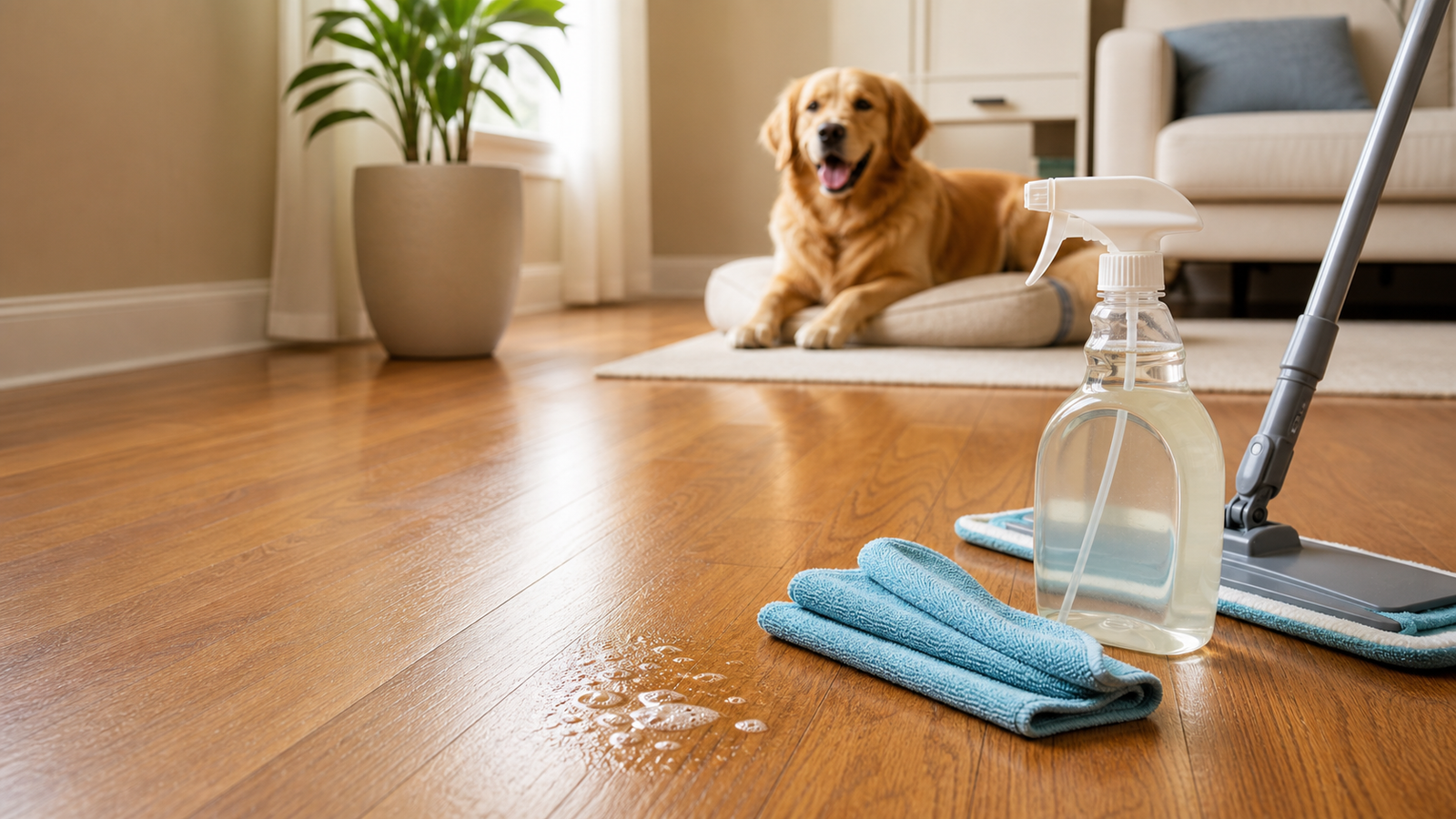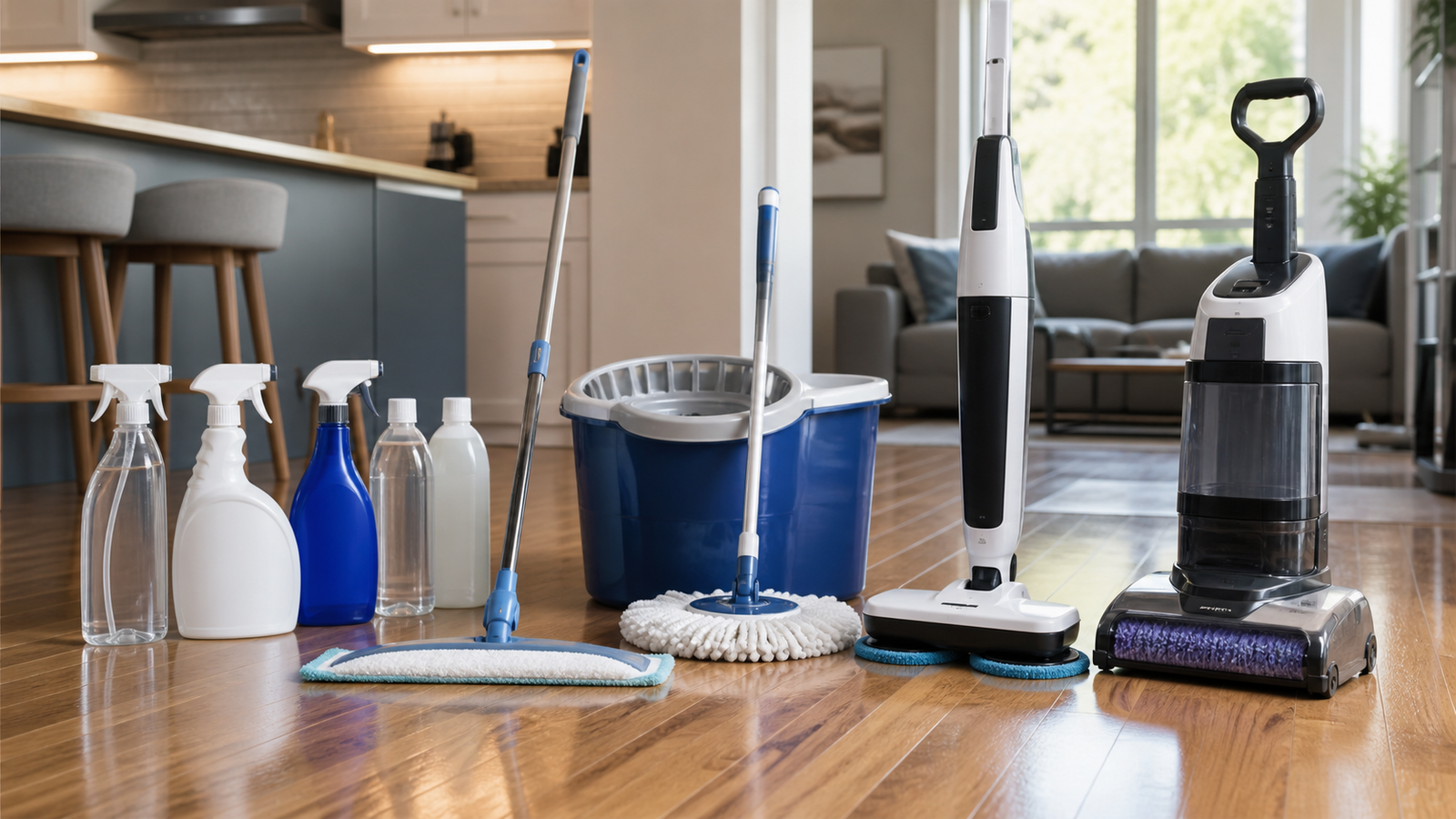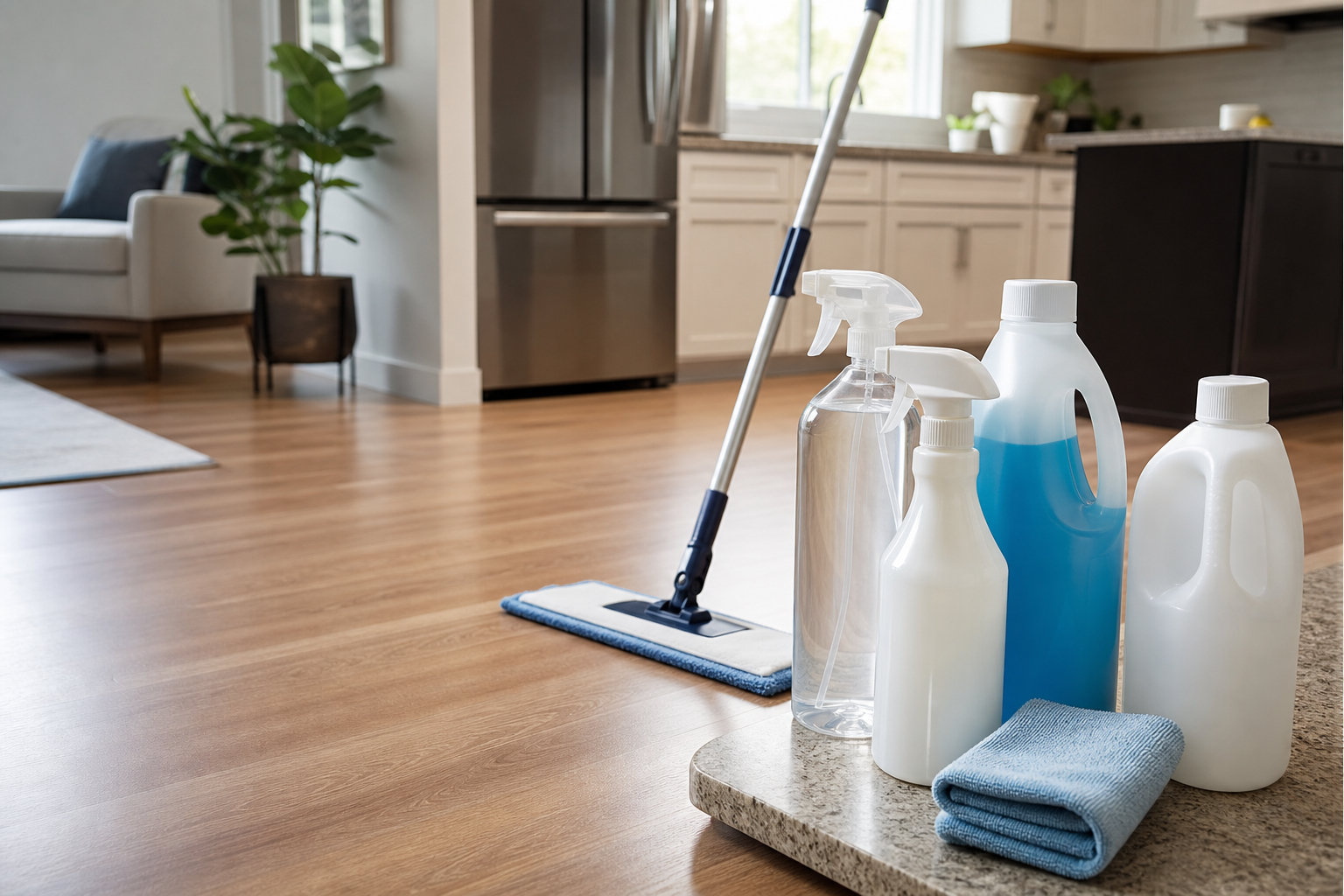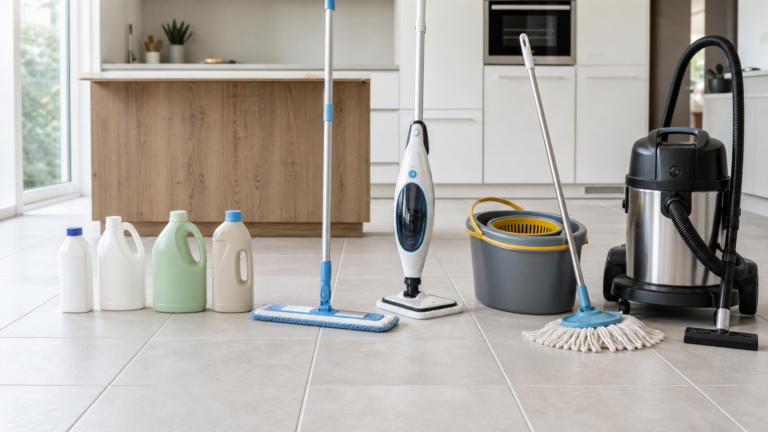

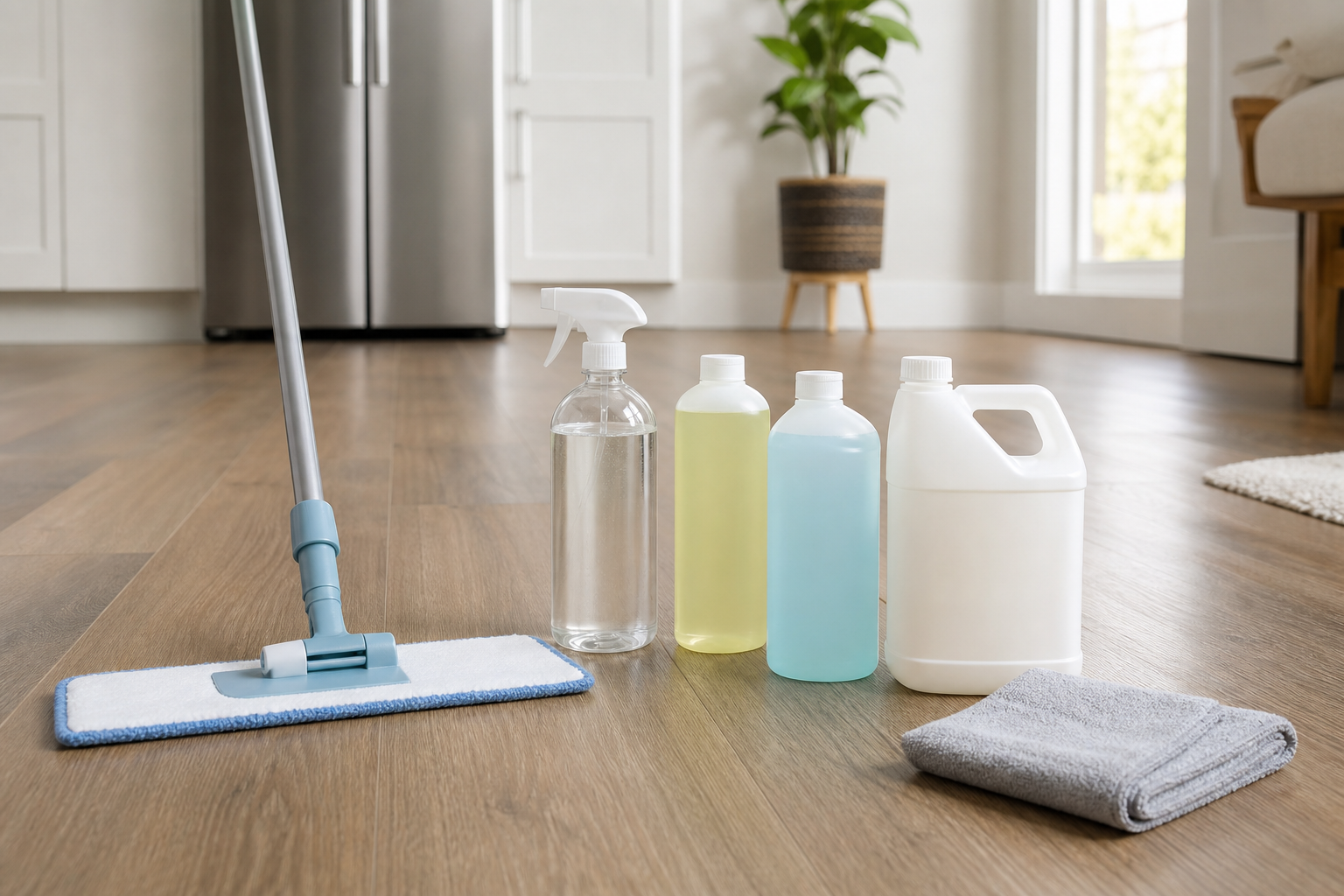
The best cleaner for LVP floors is not the strongest bottle on the shelf. It is the one that removes dirt, dries fast, and leaves the floor looking clean instead of cloudy, sticky, or dull. On luxury vinyl plank, too much water or the wrong finish product can make a floor look worse after cleaning than before.
For most homes, start with a neutral, low-residue cleaner and a microfiber mop. Then choose the bottle by your real problem: daily fingerprints, pet paw prints, a busy kitchen, a large open floor plan, or residue from a cleaner that was used too often.
Quick Picks: Best Cleaners for LVP Floors
| Pick | Best for | Why it stands out | Main caution |
|---|---|---|---|
| Best Overall: Bona Pro Series Luxury Vinyl Floor Cleaner | Most LVP homes | pH-neutral, fast-drying, made for LVT/LVP/WPC | Use the cleaner, not a shine or polish product |
| Best Daily Spray: Rejuvenate Luxury Vinyl Floor Cleaner | Everyday dirt and light grime | Spray-and-mop simplicity and no-streak positioning | Easy to confuse with Rejuvenate restore products |
| Best Value Concentrate: Zep Neutral pH Floor Cleaner | Large homes and refill users | Concentrate, low-pH, economical | Mix it correctly and keep the mop only damp |
| Best No-Rinse Multi-Surface Pick: Quick Shine Multi Surface Floor Cleaner | Spray mops and big open rooms | No-rinse, low-haze, Safer Choice positioning | Do not confuse the cleaner with the finish |
| Best Streak-Control Pick: Black Diamond Stoneworks Wood & Laminate Floor Cleaner | Dark floors and streak-prone rooms | No-rinse spray that dries fast | Too much spray can still leave a film |
| Best Gentle Plant-Based Option: Better Life Floor Cleaner | Light daily cleaning | Gentle, multi-surface, lighter scent profile | Not the strongest rescue cleaner for heavy residue |
If you want one safe default, start with Bona. If you want the cheapest long-term routine, Zep is the concentrate to look at. If your biggest complaint is streaks, Black Diamond is the cleaner most likely to solve that problem without extra fuss.

What Makes a Cleaner Safe for LVP
LVP looks tough, but it is still sensitive to moisture and residue. The top wear layer handles everyday cleaning well, but standing water, over-sprayed cleaner, and polish-like build-up can create haze or make the floor feel tacky underfoot.
A safer LVP cleaner usually has four traits:
- It is labeled for LVP, LVT, vinyl, or sealed hard floors.
- It dries quickly and does not require a heavy rinse step.
- It can be used with a microfiber mop instead of a soaking wet string mop.
- It leaves little residue when used in small amounts.
pH-neutral formulas are popular because they avoid the harshness of high-alkaline or acidic cleaners. That does not mean every neutral cleaner is perfect, but it is a good starting point when the goal is routine maintenance rather than stripping old film.
Why streaks and sticky film happen
Most streak problems are self-inflicted. Too much soap, a dirty mop pad, cleaning over dust instead of picking it up first, or using a finish product like a daily cleaner can all leave a visible film. On dark LVP, that film becomes even easier to see. If the floor still looks hazy after mopping, the next fix is usually less cleaner, not more.
Best Overall: Bona Pro Series Luxury Vinyl Floor Cleaner
Bona Pro Series Luxury Vinyl Floor Cleaner is the safest first pick for most LVP owners. Bona positions this cleaner specifically for LVT, LVP, and WPC flooring, and the formula is pH neutral, fast drying, and ready to use as a spray-and-mop cleaner. That combination is exactly what most people want from a daily floor bottle: simple, predictable, and unlikely to create extra work.
The practical advantage of Bona is consistency. You can use a light mist, run a microfiber mop over the floor, and move on without needing a bucket of water or a complicated dilution step. That makes it a strong fit for apartments, family homes, and mixed hard-floor spaces where you do not want to keep several different cleaners in rotation.
Reddit discussions around LVP keep circling back to Bona for the same reason: people want a cleaner that is safe, easy, and boring in the best possible way. The recurring warning is just as important. Bona works as a cleaner, not as a shine or polish system. Once users start adding polish-style products, the floor can turn cloudy and the problem is no longer the cleaner.
If you want one bottle to begin with and you do not want to overthink the choice, Bona is the one most readers should buy first.
Best Daily Spray: Rejuvenate Luxury Vinyl Floor Cleaner
Rejuvenate Luxury Vinyl Floor Cleaner is the best choice if you want a straightforward daily spray for LVP. Rejuvenate describes the product as pH balanced, made for luxury vinyl flooring, and designed to clean without streaks or residue. It is a ready-to-use spray-and-mop cleaner, so it fits the common routine of quick kitchen touch-ups, pet prints, and everyday dirt.
This bottle makes sense for users who want the floor to look freshly cleaned without turning the job into a bigger project. It is especially helpful in homes where the same cleaner gets used often enough that convenience matters more than chasing the absolute cheapest ounce price.
The downside is that Rejuvenate is easy to confuse with other products in the same family. Owner discussions about Rejuvenate and LVP often turn into cautionary tales about film and sheen, usually when a restorer, polish, or the wrong cleaner gets used too often. The cleaner itself is meant for cleaning, not for adding a coating.
Use it lightly, with a microfiber mop, and it is a solid everyday option. Use it like a polish and it becomes part of the problem.
Best Value Concentrate: Zep Neutral pH Floor Cleaner
Zep Neutral pH Floor Cleaner is the value pick for readers who want a concentrate rather than another spray bottle. Zep positions the formula as a neutral-pH cleaner that cleans and restores shine while preserving protective coatings on water-tolerant floors. In real owner discussions, this is the kind of cleaner people bring up when they want a budget-friendly option that still feels professional.
The main appeal is economics. One gallon lasts far longer than a 32-ounce spray, which matters if you clean a big downstairs area, a long hallway, or a home with pets and high traffic. It also gives you more control over the mix, which is useful if you are the kind of person who prefers to keep a cleaner in a spray mop refill bottle and top it up as needed.
The tradeoff is technique. A concentrate only helps if you measure it correctly. Too much product can leave the same residue problem people are trying to avoid. On LVP, the correct move is to keep the mop damp, not wet, and to follow the dilution directions instead of treating the bottle like a shortcut.
If you want the cheapest long-term routine and do not mind mixing, Zep is the strongest value option in this list.
Best No-Rinse Multi-Surface Pick: Quick Shine Multi Surface Floor Cleaner
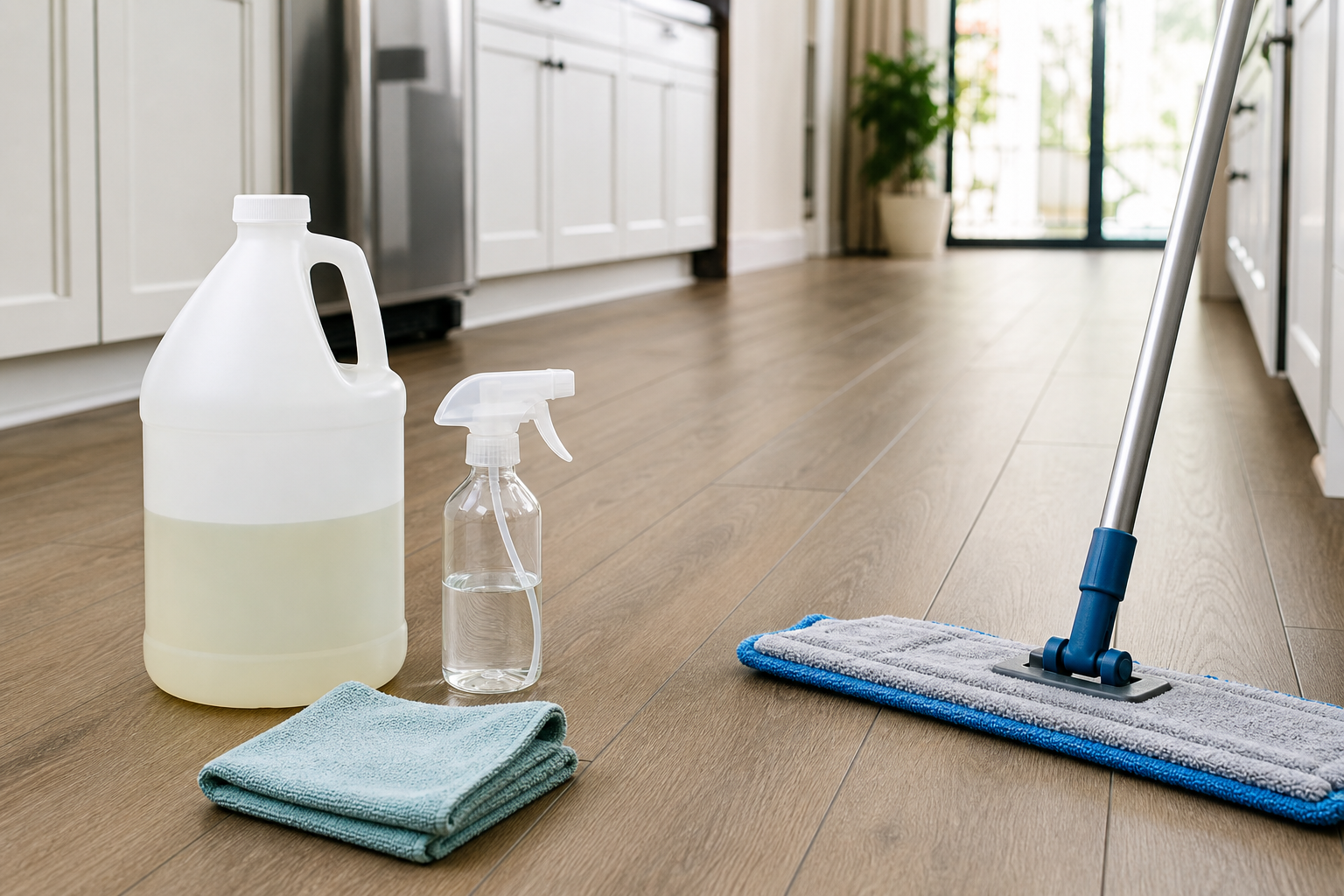
Quick Shine Multi Surface Floor Cleaner is the best pick if you want a no-rinse bottle that also covers LVP, hardwood, laminate, and other sealed floors. The brand says it leaves no hazing, streaking, or sticky film behind, and it is designed for use in spray mops and vac mops. That makes it a practical option for bigger rooms where you want to clean quickly and move on.
The reason Quick Shine keeps showing up in real-world floor discussions is the same reason it gets mixed feedback: people often mix up the cleaner and the finish. Quick Shine also sells floor finish products, and that is where many of the buildup complaints come from. A cleaner is for dirt. A finish is for changing the surface appearance. Those are very different jobs.
If you want a simple, no-rinse spray cleaner that covers a lot of floor types, Quick Shine works well. If you are trying to strip old film or make a dull floor look glossy, the cleaner is not the product to reach for first.
For busy homes, this is a solid middle-ground pick: easy to use, widely compatible, and less fussy than a concentrate.
Best Streak-Control Pick: Black Diamond Stoneworks Wood & Laminate Floor Cleaner
Black Diamond Stoneworks Wood & Laminate Floor Cleaner is the best choice when the main complaint is streaks. The product page positions it as a no-rinse cleaner that removes dirt, grime, and sticky residue without dulling the finish, and it explicitly includes vinyl plank flooring in the compatible surfaces. That is a useful fit for LVP owners who are tired of seeing mop trails after the floor dries.
This is the bottle for people who want the floor to look clean, not coated. It works well in kitchens, living rooms, and entryways where the same light layer of dust and foot traffic keeps showing up. It is also a good option if you have a dark floor that exposes every cloudy swipe.
Owner discussion around Black Diamond is generally favorable because it behaves like a cleaner rather than a finish. In laminate and vinyl threads, people recommend it when they want something simple, streak-free, and easy to pair with a microfiber mop. The usual warning still applies: if you spray too much, even a good cleaner can leave you chasing the haze with a dry cloth.
If streaking is the reason you are shopping at all, this is one of the cleaner picks most likely to solve it.
Best Gentle Plant-Based Option: Better Life Floor Cleaner
Better Life Floor Cleaner is the gentle daily option for readers who prefer a lighter, plant-based routine. Better Life positions the formula as a multipurpose cleaner for hardwood, tile, marble, laminate, vinyl, and other sealed floors, with a cleaner that is meant to leave a streak-free finish without the harsh industrial feel. It is a good fit for homes where the floor is cleaned often, but not usually beaten up by heavy grime.
This bottle is less about rescue cleaning and more about everyday upkeep. Think pet footprints, light kitchen smudges, and weekly maintenance rather than old residue or a floor that needs a serious reset. The scent profile is also part of the appeal for readers who do not want a strong chemical smell lingering after they mop.
In owner discussions, Better Life usually comes up as a softer, more pleasant-feeling cleaner rather than a heavy-duty problem solver. That makes it a good option for readers who care about a lighter scent, everyday safety, and a routine that feels simple to repeat.
If you want a gentle cleaner that still works across sealed floors, Better Life is an easy recommendation.
Comparison Table: Residue, Shine, Scent, and Use Case
| Cleaner | Application | Finish feel | Best use case | Who should skip it |
|---|---|---|---|---|
| Bona Pro Series Luxury Vinyl Floor Cleaner | Spray | Low-residue, natural clean | Most LVP homes | Buyers who want a glossy effect |
| Rejuvenate Luxury Vinyl Floor Cleaner | Spray | Clean and refreshed | Daily dirt and quick touch-ups | Anyone tempted to mix it up with restorer products |
| Zep Neutral pH Floor Cleaner | Concentrate | Controlled clean | Large homes and low-cost routines | Buyers who want a ready-to-use bottle |
| Quick Shine Multi Surface Floor Cleaner | Spray / vac mop | No-rinse clean | Open rooms and multi-surface homes | Anyone likely to confuse cleaner and finish |
| Black Diamond Stoneworks Wood & Laminate Floor Cleaner | Spray | Streak-control focus | Dark LVP and streak-prone rooms | Buyers who always over-spray |
| Better Life Floor Cleaner | Spray / mop | Light everyday clean | Gentle maintenance and lighter scent | Heavy residue removal |
The comparison is really about residue control. On LVP, less cleaner usually wins. If your floor already feels tacky, the goal is not more product. The goal is a cleaner that disappears cleanly, then a mop routine that does not re-deposit what you just picked up.
Real-World Buying Lessons From LVP Owners
The clearest lesson from owner discussions is that most LVP problems are not caused by the floor itself. They are caused by a bad cleaning routine. The same complaint shows up again and again: the floor looks dirty, but the actual issue is film from soap, polish, or too much cleaner.
That is why Bona keeps getting recommended. It feels safe, predictable, and easy to use. But owners also point out that Bona is only helpful when it stays in its lane as a cleaner. If you start treating it like a shine product, the same floor can begin to look cloudy.
Quick Shine gets a different kind of attention. People like the idea of a simple multi-surface cleaner, but the product family has a reputation for buildup when the floor finish version gets used where the cleaner should have been. Once that finish layer builds up, ordinary mopping does not solve the problem quickly.
Rejuvenate sits in the middle. It has a strong daily-cleaner pitch, but LVP owners are cautious because a lot of hard-floor products in the same category promise both cleaning and visual improvement. That is where the film complaints start. Owners want a floor that dries clean, not a floor that looks shiny until the next daylight hits it.
Zep and Better Life get a more practical kind of praise. Zep gets love for the concentrate value and the low-pH, easy-to-mix routine. Better Life gets praised for being lighter, gentler, and less harsh-smelling than some other options.
The pattern is simple: on LVP, the best cleaner is usually the one that leaves the least behind.
How to Clean LVP Floors Without Streaks
Start dry. Vacuum or dust mop before any liquid touches the floor. Grit is what turns a normal clean into a gray, streaky mess. If you mop over dust, the cleaner just spreads the dust around and makes the problem harder to see.
Then clean in small sections. Spray the product lightly, or apply a diluted concentrate according to the label, and work one section at a time. A microfiber flat mop is the safest default because it holds just enough moisture to clean without flooding the plank seams.
If the mop pad looks dirty, stop and rinse or replace it. A dirty pad does not clean more; it just pushes residue around. For a full room, one pad may not be enough. That is normal.
If the floor still looks cloudy after drying, do a dry microfiber buff. On darker LVP, this often fixes the problem faster than adding another round of liquid cleaner. If a dry buff helps, you were probably dealing with moisture or residue rather than a bad product choice.
The mop matters as much as the cleaner
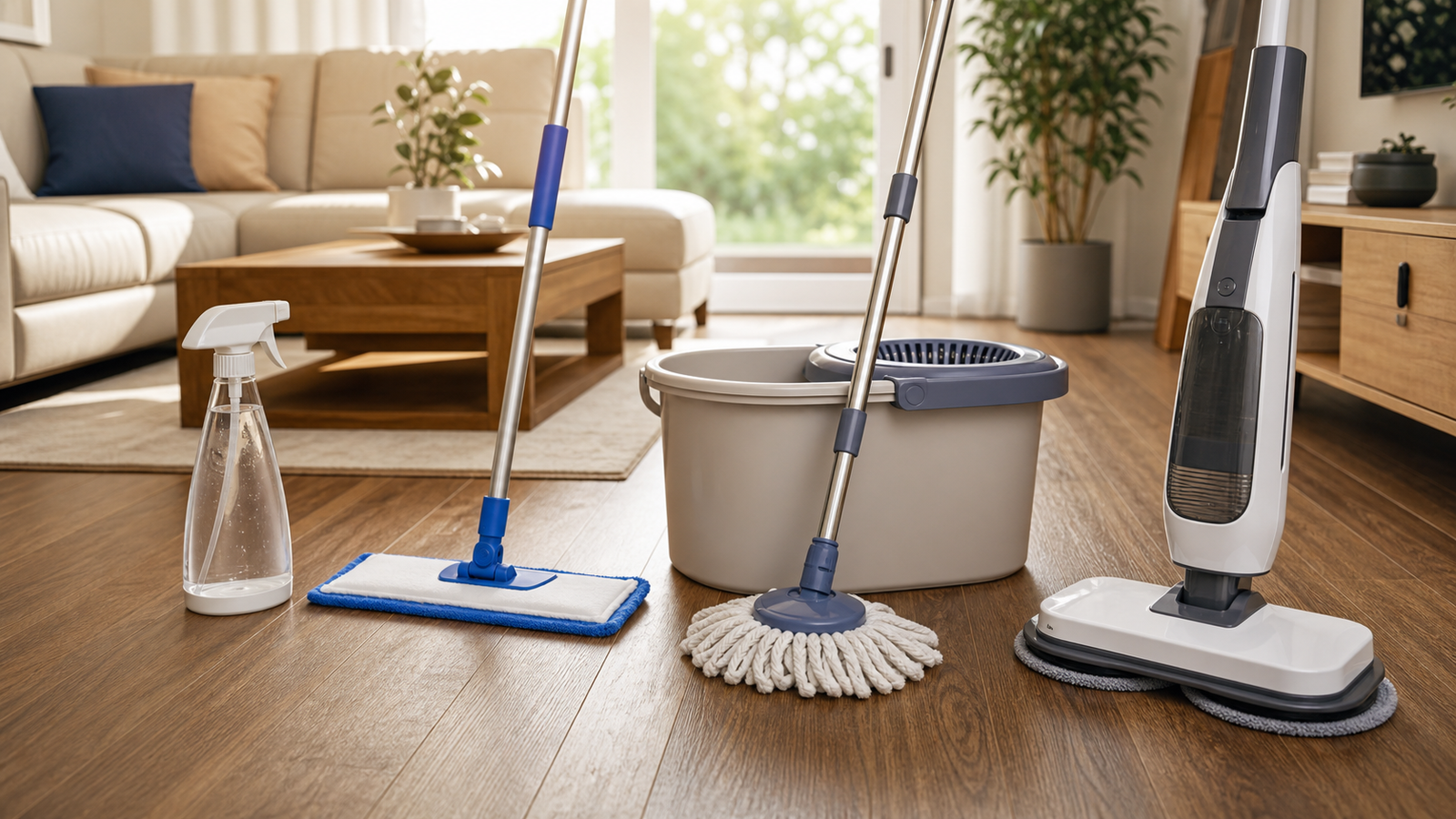
A spray mop, a well-wrung microfiber flat mop, or a spin mop that has been wrung almost dry can all work. The common mistake is using a wet mop like you would on tile. LVP does not need that much water. Keep the surface damp, not wet, and you will avoid most of the streak complaints people blame on the cleaner bottle.
Dark floors need a lighter hand
Dark LVP shows everything. Cleaner trails, footprints, lint, and water marks all stand out more. Use less product than you think you need, especially on the first pass. If the floor still looks dull, clean the next section with the same light touch rather than soaking the first one.
What to Avoid on LVP Floors
Avoid steam mops unless the flooring manufacturer explicitly allows them. Heat and moisture are a bad combination for many vinyl plank installations, and the risk is not just a wet-looking floor today. It is long-term edge damage, lifted seams, or a warranty problem later.
Avoid wax, polish, and floor finish products unless you are intentionally trying to change the look of the surface and you have checked the manufacturer guidance. A lot of the worst LVP stories come from people using a product that was meant to add shine, not just clean dirt. Once that film is on the floor, ordinary mopping often makes the floor look worse.
Avoid over-diluting or over-applying any cleaner. Concentrates only work when they are mixed correctly. Spray bottles only work when they are used lightly. Too much soap leaves the same sticky problem people were trying to solve.
Vinegar is more complicated. Some flooring guides allow a mild vinegar solution, while others discourage acidic cleaners. If your floor maker says no, do not try to outsmart the label. Manufacturer guidance wins.
The safest general rule is simple: keep LVP damp, not wet, and keep the cleaner low-residue.
Final Verdict: Which LVP Floor Cleaner Should You Buy?
If you want one bottle that will work for most homes, buy Bona Pro Series Luxury Vinyl Floor Cleaner. It is the safest default because it is made for LVT/LVP/WPC, dries quickly, and does not ask you to think too hard.
If you want a daily spray for quick kitchen and entryway cleaning, Rejuvenate Luxury Vinyl Floor Cleaner is the simple pick. If you want the cheapest long-term routine, Zep Neutral pH Floor Cleaner is the value move.
For large rooms and no-rinse convenience, Quick Shine Multi Surface Floor Cleaner is the easiest multi-surface option. If streaks are your main problem, Black Diamond Stoneworks Wood & Laminate Floor Cleaner is the sharper choice. If you want a gentler, lighter-scent daily cleaner, Better Life Floor Cleaner is the safer-feeling option.
FAQ
What is the best thing to clean LVP floors with?
A pH-neutral, low-residue cleaner and a microfiber mop. That is the safest default for most LVP floors. If you want one easy first pick, Bona is the strongest general recommendation.
Is Bona safe for LVP floors?
Yes. Bona’s luxury-vinyl cleaner is formulated for LVT, LVP, and WPC flooring and is designed to dry fast with no streaking or residue. Just use the cleaner, not the polish or shine product.
Can you use vinegar on LVP floors?
Sometimes, but not always. Some flooring guides allow a mild vinegar solution, while others discourage acidic cleaners. If the manufacturer says not to use vinegar, skip it and use a proper LVP cleaner instead.
Can you use a steam mop on LVP floors?
Usually no, unless the flooring maker specifically approves it. Steam adds heat and moisture, and many LVP floors do not love either one.
Why are my LVP floors sticky after mopping?
Usually it is too much cleaner, too much water, a dirty mop pad, or a product that belongs in the polish/finish category instead of the cleaner category. The fix is usually less product and a dry microfiber buff.
What should you avoid on LVP floors?
Avoid steam mops, wax, polish, heavy finishes, and soaking wet mops. Also avoid guessing at dilution ratios. LVP is happiest with light moisture and low residue.